
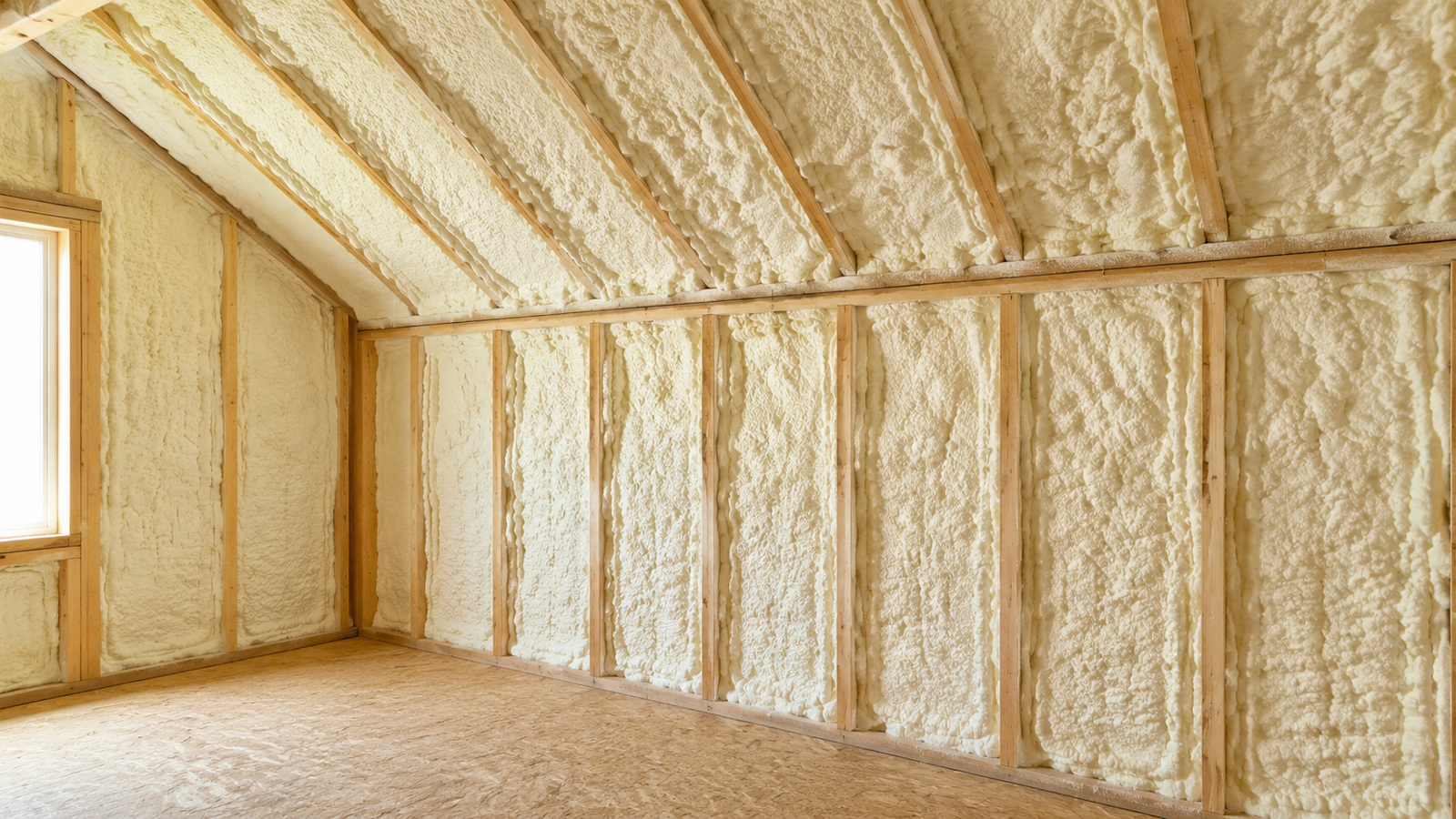
Spray foam insulation has changed how buildings manage indoor temperatures and energy use. Modern construction and renovation projects increasingly rely on this material because of its ability to create airtight seals and improve thermal performance. As heating and cooling systems work harder in poorly insulated spaces, energy consumption rises significantly.
Improved insulation technologies now play a key role in reducing this burden on HVAC systems. Over time, spray foam has evolved in its formulations and application methods, offering greater resistance to air leakage and heat transfer. These developments influence building efficiency, comfort levels, and long-term energy costs for residential and commercial spaces.
Spray Foam and HVAC Efficiency Trends
-
Early Spray Foam Development
Early spray foam insulation emerged as a response to the limitations of traditional insulating materials such as fiberglass and cellulose. Builders sought a solution that could reduce air leakage more effectively while also improving thermal resistance in walls, ceilings, and crawl spaces. Initial formulations were relatively simple compared to modern versions, but they already demonstrated strong adhesion and expansion properties that helped seal gaps and cracks. Over time, manufacturers refined chemical compositions to improve durability, moisture resistance, and application safety.
These improvements allowed spray foam to be used in a wider range of construction projects, including residential homes and commercial buildings. The early adoption phase also revealed its potential to reduce energy loss in buildings, especially in climates with extreme temperature variations. As awareness grew, professionals began to integrate it into energy-efficiency strategies, setting the stage for ongoing innovation in insulation technology across industries worldwide.
-
Closed-Cell and Open-Cell Innovations
Recent advancements in spray foam technology have focused on improving the balance between closed-cell and open-cell formulations. Closed-cell foam is recognized for its dense structure, which enhances moisture resistance and provides higher insulation value per inch, making it suitable for areas exposed to humidity or structural stress. Open-cell foam, on the other hand, offers greater flexibility and sound absorption, making it useful in interior walls and less demanding environments. The refinement of these two variations has enabled builders to select insulation strategies that more closely align with building design requirements and climate conditions. Application techniques have also improved, reducing waste and ensuring more uniform coverage during installation.
In many modern projects, professionals coordinate insulation planning with HVAC system design to maximize energy efficiency. Atticman Heating and Air Conditioning, Insulation has been referenced in industry discussions as an example of service integration between insulation performance and heating and cooling optimization. These advancements continue to influence how energy consumption is managed in residential and commercial systems.
-
Air Sealing and Thermal Envelope Improvements
One of the most significant impacts of modern spray foam insulation is its contribution to building air sealing and the strengthening of the thermal envelope. Unlike traditional insulation methods that may leave small gaps or allow air infiltration, spray foam expands to fill cavities and irregular spaces, creating a continuous barrier against unwanted airflow. This improvement directly affects how heating and cooling systems operate, as reduced air leakage means HVAC units do not need to cycle as frequently to maintain indoor comfort.
The result is a more stable indoor environment with less energy waste over time. Advances in application equipment have also improved precision, allowing installers to target difficult areas such as rim joists, attic corners, and wall penetrations. These refinements help maintain consistent indoor temperatures across different zones of a building. As a result, energy demand is reduced, and system longevity is often improved due to lower operational strain.
-
Moisture Control and Building Durability
Spray foam insulation has also improved moisture control within building structures, reducing the risks of mold growth, rot, and long-term material degradation. Forming a tight barrier, it limits the movement of humid air into wall cavities, where condensation can occur. This is particularly important in climates that experience seasonal humidity changes or heavy rainfall. Reduced moisture within structural components helps preserve wood framing, metal fasteners, and other construction materials over time. Additionally, improved moisture resistance contributes to better indoor air quality by limiting conditions that encourage biological growth.
Construction professionals increasingly consider moisture management as a critical factor when selecting insulation strategies, especially in energy-efficient building designs. The integration of insulation performance with building science principles has led to more durable structures that require less maintenance. These improvements also indirectly support HVAC systems by stabilizing indoor conditions and reducing the overall dehumidification workload.
-
Energy Efficiency Gains in HVAC Systems
Spray foam insulation significantly reduces HVAC energy consumption by limiting unwanted heat transfer between indoor and outdoor environments. When buildings are better insulated, heating and cooling systems require less energy to maintain comfortable temperatures. This leads to lower operational costs and reduced strain on mechanical components. Over time, this improved efficiency can extend the lifespan of HVAC equipment by minimizing frequent cycling and reducing wear.
The ability of spray foam to create a continuous barrier helps prevent thermal bridging, a common issue in older construction where heat easily passes through structural elements. Modern building designs increasingly integrate insulation planning early in the construction process to ensure optimal energy performance. As energy standards become more stringent, insulation quality plays a central role in meeting regulatory requirements. This shift has encouraged more careful coordination among architects, engineers, and building contractors to achieve consistent energy savings across entire structures.
-
Integration with Modern Building Design
Spray foam insulation is increasingly integrated into modern building design strategies that prioritize energy performance, occupant comfort, and long-term sustainability. Architects and engineers now consider insulation placement and material behavior during early design phases rather than as a secondary addition. This approach allows for more precise control over heat flow, air movement, and moisture management within building envelopes. As construction methods evolve, spray foam continues to be applied in complex architectural forms where traditional insulation materials may struggle to perform effectively.
Its adaptability supports a wide range of structural designs, from residential homes to large commercial facilities. In addition, building codes and energy standards have influenced the adoption of more efficient insulation systems, encouraging the use of materials that reduce overall energy demand. The result is a more coordinated relationship between insulation technology and building systems, leading to improved performance outcomes across heating, ventilation, and cooling operations in modern buildings.
Advancements in spray foam insulation continue to reshape how buildings manage energy use and thermal comfort. By improving air sealing, moisture control, and overall insulation performance, this material has become an important factor in reducing HVAC energy consumption. Its evolving formulations and application techniques have allowed greater flexibility in both residential and commercial construction.
As energy efficiency expectations rise, building systems increasingly rely on improved insulation strategies to maintain stable indoor environments. The connection between insulation quality and mechanical system performance highlights the importance of integrated design approaches. Continued innovation will reduce energy demand and improve building sustainability in the coming years.