
In today’s digital world, understanding basic coding concepts is no longer limited to software developers or IT professionals. Coding skills have become essential for students, entrepreneurs, marketers, engineers, and anyone who wants to thrive in a technology-driven environment. Whether you dream of building websites, creating apps, automating tasks, or simply understanding how software works, learning the fundamentals of coding is the first and most important step.
This comprehensive guide explains basic coding concepts in a clear, beginner-friendly way. If you have never written a line of code before, don’t worry. By the end of this article, you’ll understand how programming works, why it matters, and how to start learning coding with confidence.
What Are Basic Coding Concepts?
Basic coding concepts are the foundational principles that all programming languages share. These concepts explain how computers think, how instructions are written, and how problems are solved using code. While programming languages like Python, JavaScript, Java, and C++ look different on the surface, they all rely on the same core ideas.
Learning these concepts makes it easier to switch between languages and understand programming logic instead of memorizing syntax. That’s why mastering basic coding concepts is more important than choosing a specific language at the beginning.
Why Learning Basic Coding Concepts Is Important
Understanding coding fundamentals helps you develop problem-solving skills, logical thinking, and creativity. Coding teaches you how to break complex problems into smaller, manageable steps. This skill is valuable not only in programming but also in daily life and professional decision-making.
From a career perspective, coding knowledge opens doors to high-demand jobs in software development, data science, cybersecurity, artificial intelligence, and web development. Even non-technical roles benefit from coding literacy, as automation and digital tools are now part of almost every industry.
How Computers Understand Code
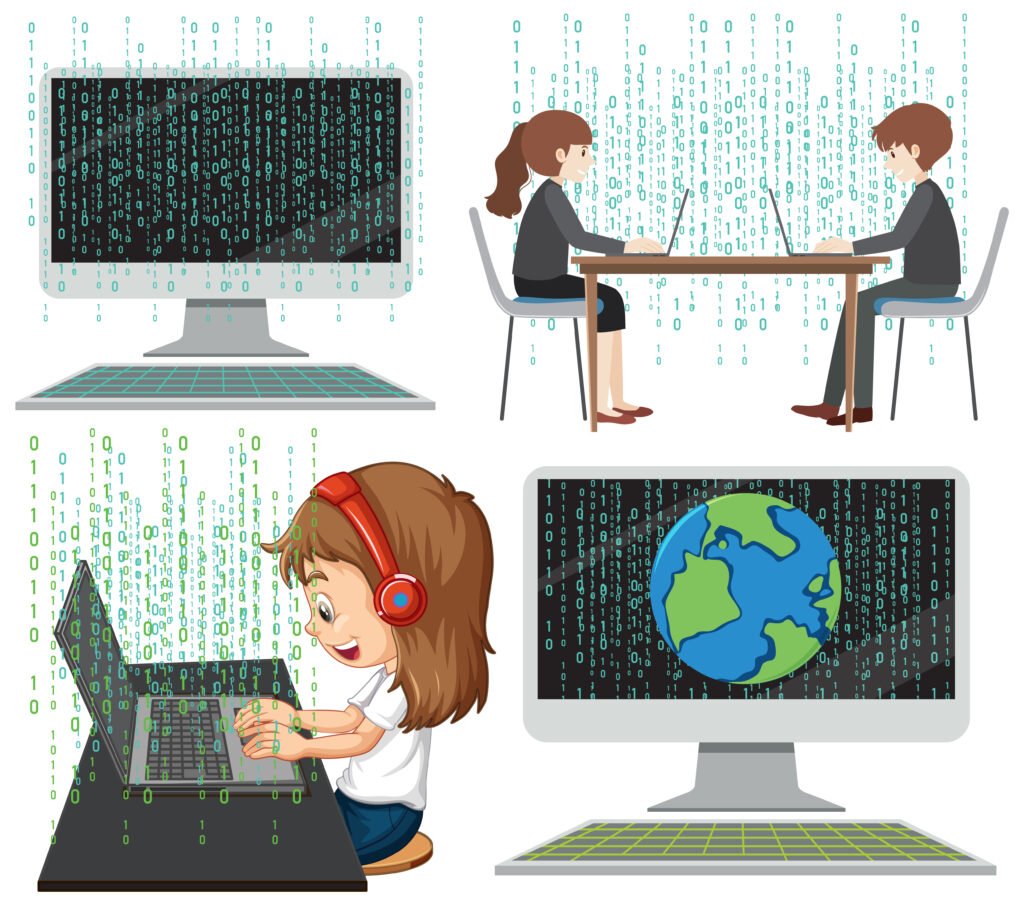
Computers do not understand human language the way we do. They operate using binary values—zeros and ones. Programming languages act as a bridge between human instructions and machine execution. When you write code, it is translated into machine-readable instructions that the computer can execute.
This translation happens through compilers or interpreters, depending on the language. Understanding this process helps beginners grasp why syntax matters and why small mistakes can cause errors.
Variables and Data Types Explained Simply
One of the most important Basic coding concepts is the variable. A variable is used to store information that a program can use and change. Think of it as a labeled box where data is kept.
Data types define what kind of information a variable can hold. Common data types include numbers, text, and true or false values. Choosing the correct data type helps programs run efficiently and reduces errors.
Understanding variables and data types is essential because almost every program relies on storing, processing, and manipulating data.
Operators and Expressions in Coding
Operators are symbols that perform actions on data. They allow you to add, subtract, compare, or combine values. Expressions are combinations of values and operators that produce a result.
For example, arithmetic operations help calculate totals, averages, or prices. Logical operations allow programs to make decisions based on conditions. Mastering operators and expressions helps you understand how programs process information step by step.
Conditional Statements and Decision Making
Conditional statements allow programs to make decisions. This is how software responds differently based on user input or specific conditions. These statements check whether something is true or false and then execute the appropriate action.
This concept is crucial because real-world applications depend heavily on decision-making. From login systems to online shopping carts, conditional logic ensures that software behaves correctly in different scenarios.
Loops and Repetition in Programming
Loops are another essential part of basic coding concepts. They allow a program to repeat a set of instructions multiple times without rewriting the same code. Loops save time, reduce errors, and make programs more efficient.
For example, loops are used to process lists of data, display repeated elements, or perform calculations multiple times. Understanding loops helps beginners write powerful programs with fewer lines of code.
Functions and Code Reusability
Functions are blocks of code designed to perform a specific task. Once created, a function can be reused whenever needed. This promotes cleaner, more organized code and makes programs easier to maintain.
Functions also make collaboration easier, as developers can work on different parts of a program independently. Learning how functions work is a major milestone in understanding programming fundamentals.
Arrays and Collections of Data
Programs often need to handle multiple pieces of data at once. Arrays and similar data structures allow you to store collections of values in an organized way. Instead of creating multiple variables, you can store related data together.
This concept is especially important for handling user data, lists, records, and large datasets. Understanding arrays prepares beginners for more advanced topics like databases and data analysis.
Understanding Errors and Debugging
Errors are a natural part of coding. One of the most valuable basic coding concepts is learning how to identify and fix mistakes. Debugging is the process of finding and correcting errors in code.
Errors can be related to syntax, logic, or runtime issues. Developing patience and problem-solving skills during debugging helps beginners grow faster and become confident programmers.
Algorithms and Problem Solving
An algorithm is a step-by-step procedure for solving a problem. Coding is not just about writing instructions but about designing efficient solutions. Algorithms help programs perform tasks correctly and efficiently.
Learning how to think algorithmically improves logical reasoning and helps beginners approach problems systematically. This skill is valuable in both technical and non-technical fields.
Understanding Syntax and Structure
Syntax refers to the rules of a programming language. Just like grammar in human languages, syntax ensures that code is written in a way the computer can understand. Structure refers to how code is organized and formatted.
Clean syntax and proper structure improve readability and reduce errors. While beginners often struggle with syntax, consistent practice makes it easier over time.
How Basic Coding Concepts Apply to Real Life
Coding concepts are not limited to computers. Conditional logic mirrors everyday decisions. Loops reflect repetitive tasks. Variables represent stored information. Understanding this connection helps beginners learn faster and apply programming skills creatively.
From building websites and mobile apps to automating office tasks and analyzing data, coding concepts power modern technology. Even social media platforms, search engines, and online games rely on these fundamentals.
Best Programming Languages to Learn for Beginners
While this article focuses on basic coding concepts, choosing a beginner-friendly language can help you practice these ideas. Languages like Python and JavaScript are popular because they have simple syntax and strong community support.
The key is not the language itself but how well you understand the underlying concepts. Once you master the basics, learning new languages becomes much easier.
Tips for Learning Coding Faster
Consistency is more important than speed. Practice regularly, even if it’s just a few minutes a day. Focus on understanding concepts rather than memorizing code. Break problems into smaller steps and don’t be afraid to make mistakes.
Using real-world examples and small projects helps reinforce learning. Reading and writing code regularly builds confidence and long-term retention.

Common Mistakes Beginners Make
Many beginners try to learn advanced topics too quickly without mastering the basics. Others get discouraged by errors or compare themselves to experienced developers. Understanding that learning coding is a gradual process helps avoid frustration.
Focusing on basic coding concepts first creates a strong foundation and makes advanced topics easier to understand later.
The Future of Coding and Digital Skills
Coding is becoming a core skill for the future workforce. As technology continues to evolve, understanding how software works will be as important as basic literacy. Learning coding fundamentals today prepares you for tomorrow’s opportunities.
From artificial intelligence to automation, coding concepts remain at the heart of innovation. Starting with the basics is the smartest way to future-proof your skills.
Final Thoughts on Basic Coding Concepts
Mastering basic coding concepts is the first step toward becoming confident in programming. These fundamentals apply to every language and every type of software. With patience, practice, and curiosity, anyone can learn to code.
Also Read: NBA Streams: The Ultimate Guide to Watching Live NBA Games Online in 2026