
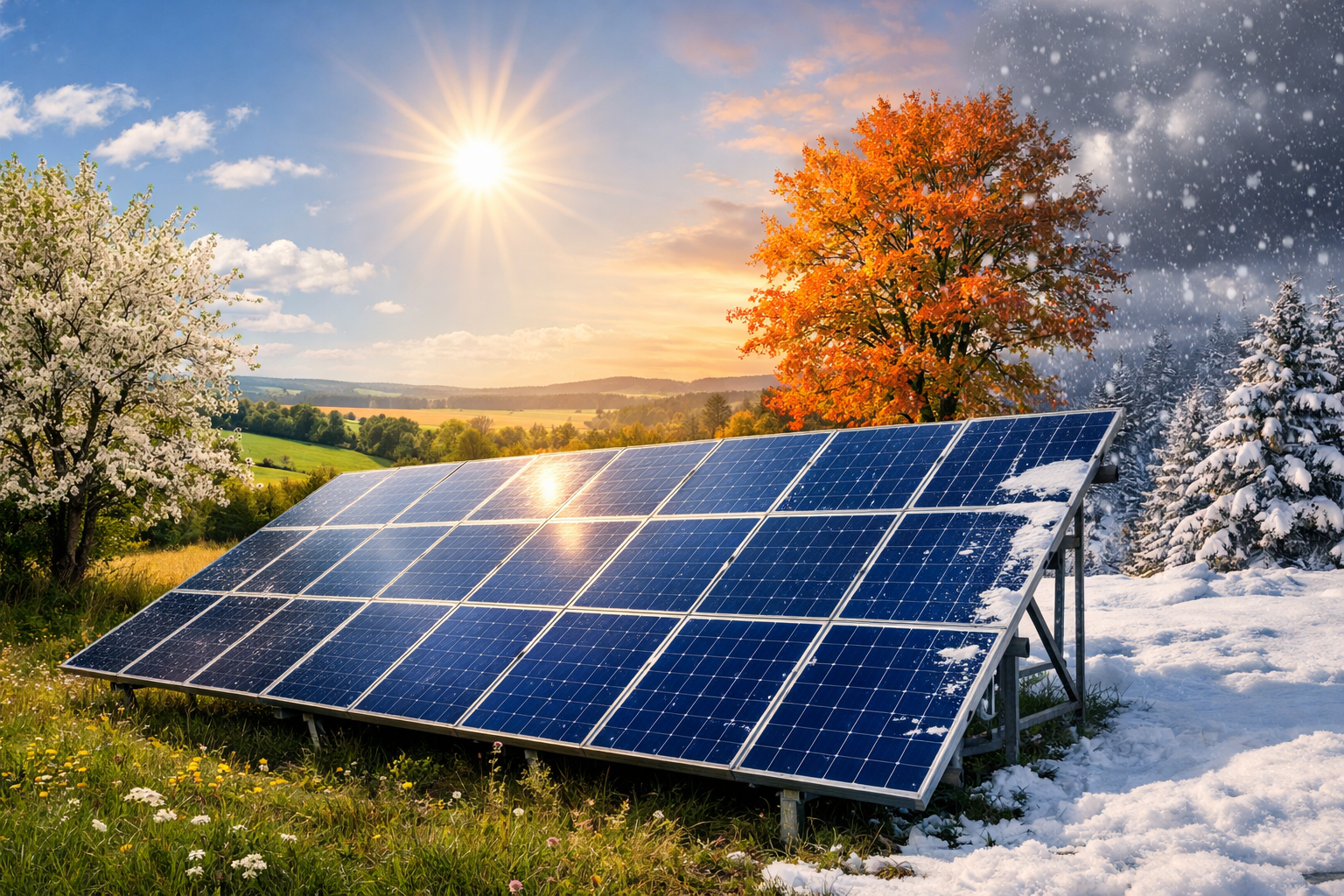
We will explore how seasonal changes and varying weather conditions influence the electricity your home solar panels produce. Solar power generation is directly tied to sunlight exposure, which fluctuates across the year due to changes in daylight hours, sun angle, and atmospheric conditions. Even though solar panels provide a sustainable and reliable energy source, their performance varies with seasonal patterns, extreme temperatures, and other environmental factors. Understanding these influences helps homeowners manage energy consumption, anticipate dips in electricity production, and effectively integrate storage or backup systems. By accounting for these variations, solar panels can become a dependable part of household energy planning, ensuring a consistent power supply while minimizing reliance on the electrical grid throughout the year.
Sunlight Availability and Seasonal Shifts
The most significant factor affecting solar panel output is the amount of sunlight available, which naturally changes with the seasons. During summer, longer days and a higher sun angle result in more solar radiation reaching your panels, leading to peak energy output. Conversely, winter brings shorter days and a lower sun angle, which reduces sunlight intensity and energy generation. Even in temperate climates, seasonal variations in sunlight can create substantial differences in monthly electricity production. Homeowners who choose AWS Solar near Los Angeles often notice higher energy production in the summer, which may offset costs or allow for battery storage, while winter months might require drawing more electricity from the grid. Geographic location further influences these patterns, with northern and southern regions experiencing more pronounced seasonal swings. Understanding these seasonal variations allows homeowners to plan energy usage effectively and optimize the benefits of their solar installation.
Cloud Cover and Weather Fluctuations
Weather conditions, particularly cloud cover, rain, and storms, significantly affect solar energy output. Solar panels produce less electricity on overcast days because dense clouds reduce the amount of sunlight reaching the panels, sometimes lowering output by nearly half. Rain and storms can temporarily decrease production, but they also help wash away dust and debris, which can improve efficiency afterward. Seasonal weather patterns, such as summer thunderstorms or winter snowstorms, introduce additional variability in energy generation that homeowners should anticipate. Modern solar technology can capture diffuse sunlight, so panels still produce some electricity on cloudy days, though output is inevitably lower. By monitoring local weather trends and preparing for reduced output, homeowners can plan energy storage or supplementary grid use more effectively, ensuring that household electricity needs are consistently met despite changing conditions.
Temperature Effects on Solar Efficiency
While sunlight is the primary driver of solar electricity generation, temperature also influences panel efficiency. Solar panels operate most efficiently in moderate temperatures, and extremely hot conditions during peak summer months can slightly reduce energy output. In colder conditions, photovoltaic cells generally perform better, even when sunlight intensity is lower. Snow can temporarily block panels, preventing production, but reflective surfaces can increase sunlight exposure once snow melts, offering a short-term efficiency boost. Additionally, extreme temperature fluctuations can affect wiring and panel connections, making routine inspections and maintenance important to maintain seasonal performance. Recognizing the interplay between temperature and solar efficiency allows homeowners to anticipate seasonal energy patterns and implement strategies, such as summer shading or winter snow removal, to optimize their electricity generation throughout the year.
Panel Orientation and Tilt for Seasonal Optimization
The orientation and tilt of solar panels play a crucial role in seasonal energy production. Panels positioned at an angle that aligns with the sun’s path receive more direct sunlight, increasing electricity generation. While a fixed tilt can work well year-round, seasonal adjustments can further enhance performance. Tilting panels more steeply during winter can capture low-angle sunlight more effectively, while a shallower angle in summer can maximize exposure during long daylight hours. Orientation toward the south in the Northern Hemisphere or north in the Southern Hemisphere ensures that panels capture the most sunlight throughout the year. Seasonal considerations are critical because the sun’s position changes daily, affecting the amount of light the panels receive. By optimizing orientation and tilt, homeowners can reduce seasonal losses in energy production and maintain a more consistent power supply.
Planning for Seasonal Energy Management
Given the seasonal fluctuations in solar output, developing an energy management strategy is essential. Battery storage systems allow excess energy produced during peak months to be stored for later use during periods of lower production. Monitoring daily and monthly electricity generation helps identify patterns of high and low output, allowing homeowners to schedule energy-intensive tasks during periods of maximum production. Energy-efficient appliances and behavioral changes, such as running dishwashers or washing machines during sunny hours, can further enhance energy management. Seasonal planning also involves anticipating household energy demands, including heating or cooling needs that vary with the weather. Combining solar energy production with storage and consumption planning ensures a stable energy supply year-round, reduces dependence on the electrical grid, and maximizes the overall benefits of a home solar system.
Seasonal weather patterns significantly influence the performance of solar panels, affecting both electricity production and the reliability of a household energy supply. Sunlight availability, cloud cover, temperature variations, and seasonal storms all contribute to fluctuations in output, highlighting the need for careful energy planning and system management. By understanding these seasonal influences, homeowners can implement strategies such as battery storage, optimized panel placement, efficient energy use, and maintenance routines to maintain consistent power throughout the year. Anticipating seasonal changes allows solar panels to function as a dependable and efficient energy solution, providing homeowners with stable electricity while reducing reliance on the grid and adapting to changing environmental conditions.