
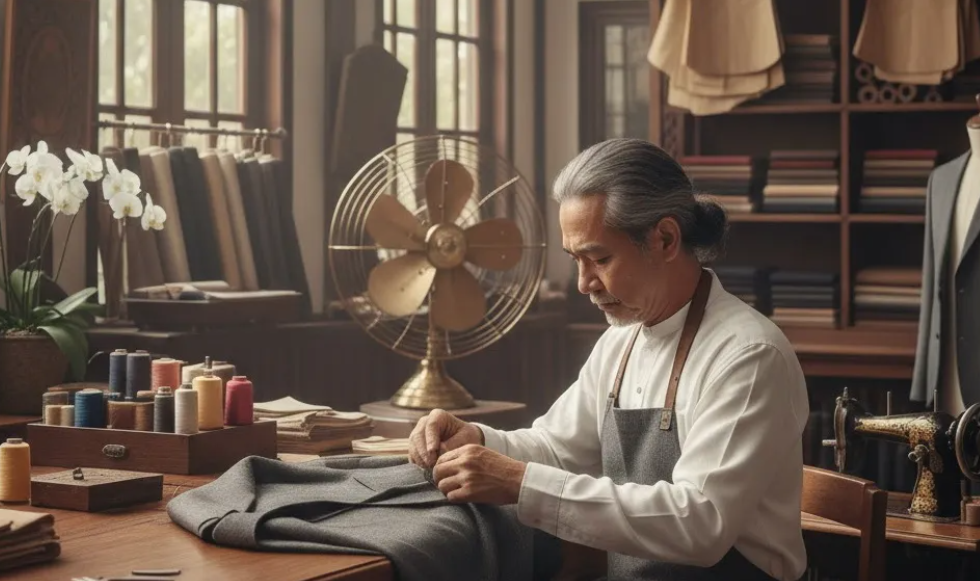
A fine suit is often judged first by its fabric. The hand may reach for the sleeve, the eye may notice the colour, and the mind may immediately associate wool, linen, cashmere, or silk with quality. Fabric matters, of course. It gives a suit its texture, weight, drape, and seasonal character. Yet fabric alone does not create distinction. Two suits may begin with similar cloth, but one can feel forgettable while the other carries a quiet sense of permanence.
The difference lies in the hidden details. True bespoke craftsmanship is not defined only by what people see at first glance. It is shaped by what happens beneath the surface: the structure inside the jacket, the way the canvas is built, the balance of the shoulders, the curve of the lapel, the precision of the fitting, and the human judgement that transforms measurements into elegance.
For men who appreciate style beyond labels, these details are where tailoring becomes personal.
The Structure Beneath the Surface
An ordinary suit often depends on shortcuts. It may look clean on a hanger, but its structure can feel flat once worn. A bespoke suit, by contrast, is designed to work with the body rather than simply cover it. The internal construction gives the jacket its shape, its movement, and its ability to mature gracefully over time.
One of the most important hidden elements is the canvas. In quality tailoring, a canvas layer helps the jacket hold its form while still allowing it to move naturally. It gives the chest depth, supports the lapel roll, and creates a more elegant line across the body. This is not something most people immediately notice, but it changes how the suit behaves with every movement.
When a jacket is well constructed, it does not feel stiff or artificial. It follows the wearer. It settles on the shoulders, frames the torso, and creates a silhouette that looks composed without appearing forced. That quiet structure is one of the clearest signs that a suit has been made with care.
The Shoulder: Where Character Begins
The shoulder is one of the most revealing parts of a suit. It determines the attitude of the jacket before any other detail has a chance to speak. A shoulder that is too wide can make the wearer look borrowed from another man’s wardrobe. A shoulder that is too tight can disturb the entire balance of the suit. In bespoke tailoring, the shoulder is studied carefully because it carries both proportion and personality.
Some men need a natural shoulder that follows the body softly. Others benefit from a slightly stronger line to bring authority and presence. The decision is not only technical; it is aesthetic. A good tailor understands that tailoring is not about forcing every man into the same ideal shape. It is about reading the individual body and creating a jacket that looks inevitable on that person.
This is where craftsmanship becomes difficult to imitate. Machines can cut cloth, and factories can repeat patterns, but a thoughtful shoulder requires judgement. It requires an eye for posture, symmetry, and how the wearer wishes to appear in the world.
The Lapel, the Button, and the Language of Proportion
The beauty of a bespoke suit often lives in proportions that are too subtle to announce themselves. The width of the lapel, the height of the gorge, the placement of the button, and the opening of the quarters all contribute to the character of the jacket. When these details are correct, the suit feels balanced. When they are wrong, even expensive fabric cannot save the impression.
A lapel is more than decoration. It frames the chest and draws the eye upward toward the face. A button stance can visually lengthen or shorten the torso. The shape of the jacket front can make the wearer appear relaxed, formal, modern, or traditional. These are decisions that depend on body type, personal taste, and occasion.
This is why discerning clients often seek Bangkok bespoke suit craftsmanship rather than a suit that simply follows a generic template. The goal is not only to produce a garment that fits, but to create one that feels visually intelligent. Every proportion should serve the wearer.
Fittings Are Where the Suit Finds Its Voice
Measurements are only the beginning of a bespoke suit. The true refinement happens during fittings, where cloth and body begin their conversation. A tape measure can record numbers, but it cannot fully understand posture, movement, asymmetry, or the way a man naturally stands.
During a fitting, the tailor observes details that may seem minor but are essential to the final result. One shoulder may sit slightly lower than the other. The wearer may stand with a forward posture. The sleeve may need to rotate differently to follow the natural position of the arm. The back may require careful adjustment so the jacket lies smoothly without pulling.
These refinements separate craftsmanship from simple sizing. A suit that has been fitted thoughtfully does not fight the body. It accommodates it. It respects the wearer’s natural shape while presenting it in the most polished way possible.
Hand-Finished Details and the Feeling of Permanence
The final difference between an ordinary suit and a bespoke suit is often felt rather than loudly seen. Hand-finished buttonholes, carefully attached buttons, clean linings, precise stitching, and balanced pockets all contribute to the overall experience of quality. These elements may not be obvious from across the room, but they are noticed over time.
Luxury is rarely only about being seen. It is also about the satisfaction of knowing that something has been made properly. A man who wears a well-crafted suit feels the difference when he fastens the jacket, reaches into the inside pocket, sits down comfortably, or catches the clean fall of the trousers in a mirror.
This sense of permanence is increasingly rare in a world of fast fashion and disposable clothing. Bespoke tailoring offers the opposite idea. It asks for patience. It rewards attention. It creates garments that are meant to remain relevant long after seasonal trends have disappeared.
Why Craftsmanship Still Matters
A suit is not made exceptional by fabric alone. Fabric gives it possibility, but craftsmanship gives it life. The hidden details determine whether a suit merely looks acceptable or truly belongs to the man wearing it. Structure, proportion, fitting, hand finishing, and the tailor’s judgement all work together to create something that feels personal and enduring.
For the modern gentleman, understanding these details changes the way he sees tailoring. He no longer judges a suit only by colour or brand. He begins to recognize balance, comfort, movement, and quiet authority. He understands that the most elegant details are often the ones that do not demand attention.
Beyond fabric lies the real art of tailoring. And in that unseen space between cloth and craftsmanship, an ordinary suit becomes something far more meaningful.