
In a fast-moving industrial setup or a busy commercial business, instant communication is everything. It is what keeps your team safe and your daily operations running smoothly. Whether you are managing a massive logistics warehouse, coordinating security for a sprawling complex, or overseeing a high-risk manufacturing plant, you cannot afford to have gaps in your connectivity.
While smartphones are fine for personal use, they just don’t cut it in tough work environments. Commercial settings demand rugged durability and zero-latency reliability that only professional two-way radios can provide. A dropped signal on a cellular network can easily stall an assembly line or leave field personnel stranded in an emergency. To check out reliable, heavy-duty devices built specifically to stop these communication failures, you can browse the options at radiored.com.mx.
Finding the right setup comes down to knowing what your daily workflow requires so you can make a smart, cost-effective investment for your business.
Why Professional Radiocommunication Outperforms Cell Phones
Many business owners and managers wonder why they should invest in a private radio setup when everyone already has a smartphone with messaging apps. It’s a fair question, but the reality is that commercial operations require a level of instant reliability, cost control, and total network ownership that mobile carriers simply cannot offer.
Instant Communication Without Network Delays
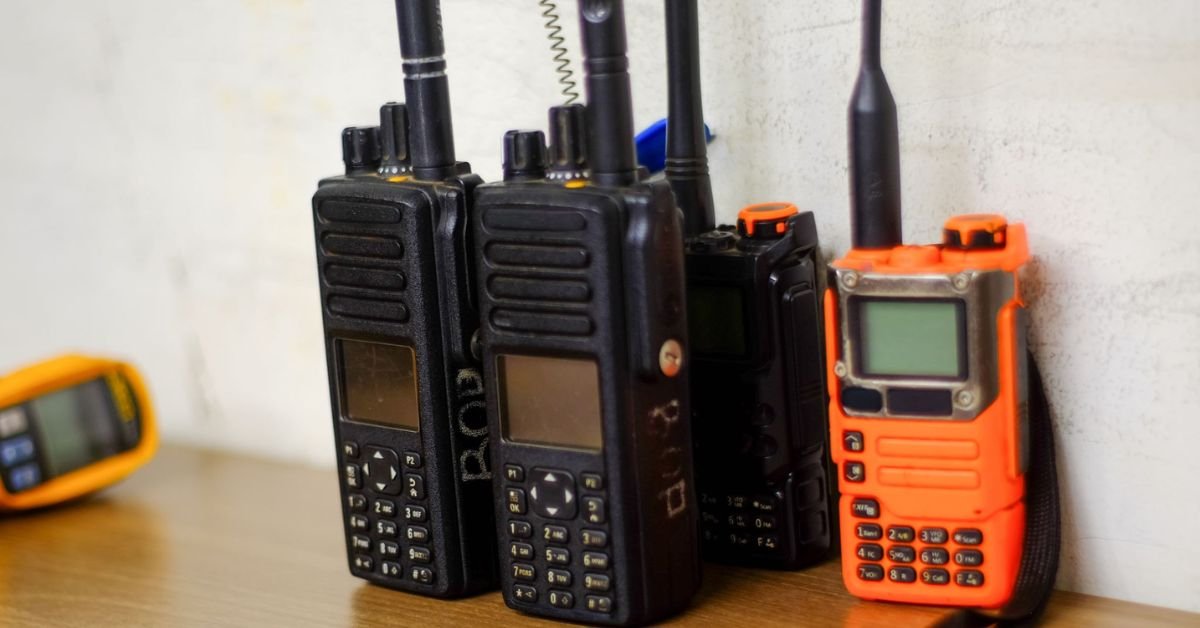
When things get hectic or an emergency pops up on the job, you don’t have time to unlock a phone screen, open an app, scroll for a contact, and wait for a call to connect. Professional radios use a Push-to-Talk (PTT) system. You press one button, and your voice instantly goes through to an individual or your entire crew.
On top of that, private radio networks don’t crash when cellular towers get overloaded during major public events, bad weather, or local power outages.
Predictable Long-Term Costs
Cellular business plans come with recurring monthly fees for every single line you open. As your team grows, those bills stack up fast. A two-way radio network, on the other hand, is mostly a one-time upfront investment in the physical hardware.
Aside from occasional maintenance or minor frequency licensing fees, you own your entire communication setup. Over time, this removes a massive chunk of overhead from your monthly operating budget.
Different Types of Commercial Radios and Their Uses
The radio market offers plenty of choices, but finding the right fit comes down to how your team moves and where they do their daily work. Let’s break down the main styles you will encounter.
Portable Handheld Radios (Walkie-Talkies)
These are the classic, compact radios that clip right onto a worker’s belt or vest. They are the go-to choice for keeping security guards, construction crews, and warehouse teams connected on the floor.
When you are looking at handheld units, make sure to check their durability ratings—especially things like Military Standards (MIL-STD) or IP ratings for dust and water resistance.
Trusted brands like Kenwood and Motorola build rugged housings specifically to survive accidental drops onto hard concrete or heavy downpours during outdoor shifts.
Mobile Vehicle-Mounted Radios
Unlike walkie-talkies, mobile radios are bolted directly inside vehicles like delivery trucks, forklifts, security cars, or heavy machinery. They draw their power straight from the vehicle’s battery and use an external antenna mounted on the roof.
The biggest advantage here is raw power. While a handheld radio usually puts out around 4 to 5 watts, a vehicle-mounted radio can pump out anywhere from 25 to 45 watts.
This massive power boost gives your drivers a much longer reach, making these units essential for city-wide delivery fleets and highway transport teams.
Specialized Solutions for Extreme Environments
Not every business operates in a cozy office or a standard retail store. Some industries work under extreme conditions where standard electronics can actually become a liability. In these environments, you need gear that is engineered to handle real workplace dangers.
Intrinsically Safe (IS) Radios
In places like oil refineries, grain silos, chemical facilities, or gas storage plants, the air can become filled with flammable vapors or fine dust. In these spaces, a standard cell phone or normal radio can actually generate a microscopic electrical spark from its internal wiring or battery, which could trigger a catastrophic explosion.
Intrinsically safe radios are built differently. They use heavily sealed, specialized components designed to ensure that even if the radio malfunctions or shorts out internally, it will never create a spark or get hot enough to ignite the surrounding air. Top-tier brands like ICOM and Motorola offer lines with strict global safety ratings specifically for these high-risk areas.
Marine and Aviation Radios
Operating on open water or up in the air requires sticking to strict, universal frequencies and protocols to keep everyone safe.
-
Marine Radios: Operating on the official VHF marine band, these radios are a complete lifeline for cargo ships, fishing boats, and port crews. They need high waterproof ratings (like IPX7 or IPX8), meaning they can take a splash or a full drop into water and still work perfectly. They also include dedicated emergency features like Digital Selective Calling (DSC) for instant distress signals.
-
Aviation Radios: These radios use Amplitude Modulation (AM) on dedicated aviation frequencies. They are crucial for airport ground crews, flight dispatchers, and private pilots who need crystal-clear, direct contact with air traffic control towers.
Extending Your Range: The Critical Role of Repeaters
A common mistake people make when setting up a business radio network is assuming that two handheld walkie-talkies can talk to each other across any distance. Because radio waves travel in a straight line, physical barriers like tall concrete buildings, steel structures, hills, and even the natural curve of the earth will block the signal. In a dense city, handheld-to-handheld range can drop down to just a few kilometers.
To get around this, businesses rely on repeaters. A repeater is a base station installed in a high spot—like a rooftop or a tower—paired with a strong antenna. The repeater catches the weak signal coming from a distant handheld radio, boosts its power instantly, and shoots it back out with much higher wattage.
If your team operates across a whole city or needs to stay connected deep inside concrete basements and tunnels, setting up a digital repeater is the only real way to wipe out your dead zones.
Must-Have Radio Accessories That Boost Efficiency
The radio itself is only half the battle. Pairing your devices with the right accessories can make a massive difference in how easily your team gets through their daily shift.
Earpieces and Surveillance Kits
On a loud manufacturing floor, a busy construction site, or at a concert venue, hearing a tiny built-in radio speaker is almost impossible. On the flip side, in high-end hospitality or security, loud radio noise can disturb your guests.
Acoustic tube earpieces and lapel mics let your staff hear every message perfectly and reply discreetly without having to drop what they are doing.
Long-Life Batteries and Multi-Unit Chargers
A radio with a dead battery isn’t helping anyone. For long 12 or 24-hour shifts, you need high-capacity Lithium-Ion (Li-Ion) batteries that don’t suffer from “battery memory” issues that shorten their lifespan over time.
Plus, using multi-unit gang chargers lets you charge six to twelve radios at once from a single wall outlet, keeping your back office clean and organized.
Heavy-Duty Cases and Belt Clips
Protecting your radios from the inevitable daily drops will save you a lot of money in the long run. Tough nylon or leather carrying cases, matched with heavy-duty rotating belt clips, keep the devices firmly attached to your team while they are climbing ladders, moving stock, or running security checks.
Finding a Reliable Communication Equipment Supplier
When you are looking to upgrade your business communication setup, buying from random, unverified online sellers can leave you with counterfeit gear, zero warranty support, and radios that aren’t programmed to the right frequencies. It pays to get your equipment from an established dealer who understands industrial communications inside and out.
If you are looking for authentic equipment, competitive pricing, and specialized accessories, you can browse a massive selection of industrial-grade options directly at RadioRed.
Sourcing your gear from a dedicated, professional supplier ensures you receive genuine manufacturer warranties, expert advice on frequency setup, and quick access to official replacement parts when you need maintenance.
The Shift from Analog to Digital Technology
The commercial radio world has experienced a massive wave of innovation. While classic analog radios are still common for small, budget-friendly setups, digital radio technology (using platforms like DMR or NXDN) is quickly taking over the commercial market.
1. Crystal-Clear Audio Quality
With old analog setups, as a worker walks toward the edge of the coverage zone, the audio gets fuzzier and starts filling up with static, crackles, and wind noise.
Digital radios use smart internal software that actively filters out background clutter—like heavy machine hums or loud wind—and keeps the voice sounding clear right up to the absolute edge of the radio’s range.
2. Better Frequency Efficiency
Radio frequencies are limited resources regulated by government agencies. Digital systems use clever time and frequency slicing techniques (like TDMA) to let a single radio channel handle two completely separate, simultaneous conversations at the exact same time.
This effectively doubles your channel capacity without forcing you to pay for extra frequency licenses.
3. Enhanced Privacy and Encryption
One big flaw with old analog channels is that anyone with a cheap, basic frequency scanner could easily listen in on your private logistics or security chats.
Modern digital radios use tough digital encryption keys, ensuring your internal business conversations stay completely private and secure from outside snoopers.
4. GPS Tracking and Live Data
Digital radios do a lot more than just pass voice notes; they also handle data. Many mid-tier and premium digital models come with built-in GPS chips.
This means your dispatch center can see exactly where every field worker or vehicle is on a live digital map in real time, which is a massive help for managing routes and keeping workers safe in emergencies.
Quick Maintenance Steps to Protect Your Radio Fleet
Buying commercial-grade communication gear is a serious investment. To make sure your radios last for years without giving you trouble, it helps to put together a simple preventive maintenance routine for your team.
-
Clean Battery Contacts Regularly: Dust, grime, and sweat from workers’ hands easily build up on the golden battery terminals and accessory ports. Over time, this buildup can cause charging failures or weak connections. Give these spots a quick wipe once a month with a dry microfiber cloth or some electronic contact cleaner.
-
Protect the Antenna: The antenna is actually the most sensitive part of a walkie-talkie. Train your team never to pick up or carry a radio by its antenna.
-
Pulling on it can easily crack the internal copper wiring or strip the screw threads, which drops your range drastically and can even burn out the radio’s internal circuits from trapped power.
-
Store Spare Batteries Separately: If you are packing away backup radios for the off-season, always take the batteries out of the radio bodies. Leaving them attached will slowly drain the battery to absolute zero, which can permanently ruin its ability to hold a charge.
-
Keep them in a cool, dry place at about 40% to 50% charge.
Summary: Building a Connected and Smart Network
Picking the right commercial radiocommunication gear isn’t about tracking down the most expensive or flashiest model available. It’s about finding the sweet spot where your workspace layout, your team’s daily habits, and your budget all align.
By taking a close look at the core factors—like choosing the right frequency band (UHF for indoor spaces with lots of walls or VHF for wide-open outdoor areas), getting intrinsically safe models for hazardous areas, or adding a repeater to crush dead zones—you build a highly efficient, reliable network.
A dependable communication setup is an incredibly high-yield tool that unifies your staff, speeds up decision-making, and keeps your entire workforce safe.