
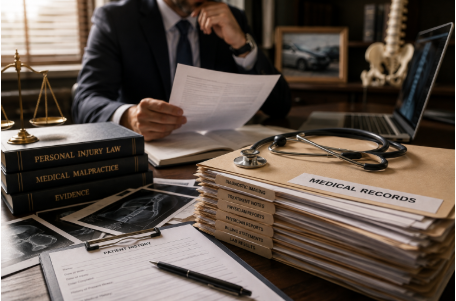
Medical records can play an important role in a personal injury case. They provide written evidence of an injury, the treatment received, and the medical expenses connected to the incident. Along with photographs, witness statements, police reports, and other evidence, medical records can help establish the extent of a person’s losses.
Medical Records Help Document Injuries
After an accident, medical records can show what injuries were diagnosed and what treatment was recommended. Records may include information from emergency room visits, doctor appointments, physical therapy, diagnostic testing, prescriptions, and follow-up care.
This documentation can help create a timeline showing how an injury developed from the time of the accident through treatment and recovery.
They Can Support Medical Expenses
Medical bills are another important part of documenting financial losses after an injury. California courts identify medical bills and doctor reports as examples of evidence that can help prove injuries and the damages being claimed.
Keeping copies of bills, treatment records, and related receipts can make it easier to account for the costs associated with an injury.
Records May Help Establish Ongoing Problems
Some injuries require treatment for weeks, months, or longer. Medical records can document continuing symptoms, additional treatment, and future medical concerns identified by healthcare professionals.
This can be particularly relevant when a person is claiming damages related to ongoing treatment or future problems caused by an injury.
Medical Records May Be Requested During a Case
Medical records can become part of the evidence exchanged during a personal injury lawsuit. California courts explain that discovery procedures may be used to request relevant documents, including medical records related to injuries and claimed treatment or costs.
Not every medical record is necessarily relevant to every case. The information requested generally needs to relate to issues involved in the dispute.
Keep Your Medical Documentation Organized
Anyone involved in a personal injury claim should keep medical bills, treatment records, prescriptions, appointment information, and other relevant documents organized. It can also be helpful to keep track of how an injury affects daily activities and work.
Medical records are not the only evidence used in a personal injury case, but they can provide important documentation of the injury, treatment, and resulting expenses. Keeping accurate records from the beginning can make it easier to understand and support a claim.
This post was written by Kelly-Ann Jenkins of Jenkins Law P.L. Kelly-Ann is an insurance attorney St. Petersburg, FL. The information on this site is not intended to and does not offer legal advice, legal recommendations, or legal representation on any matter. Hiring an attorney is an important decision, which should not be based on advertising. You need to consult an attorney for legal advice regarding your situation.
The information provided on this website does not, and is not intended to, constitute legal advice; all information, content, and materials available on this site are for general informational purposes only. Information on this website may not constitute the most up-to-date legal or other information. This website contains links to other third-party websites. Such links are only for the convenience of the reader, user or browser; the ABA and its members do not recommend or endorse the contents of the third-party sites.