
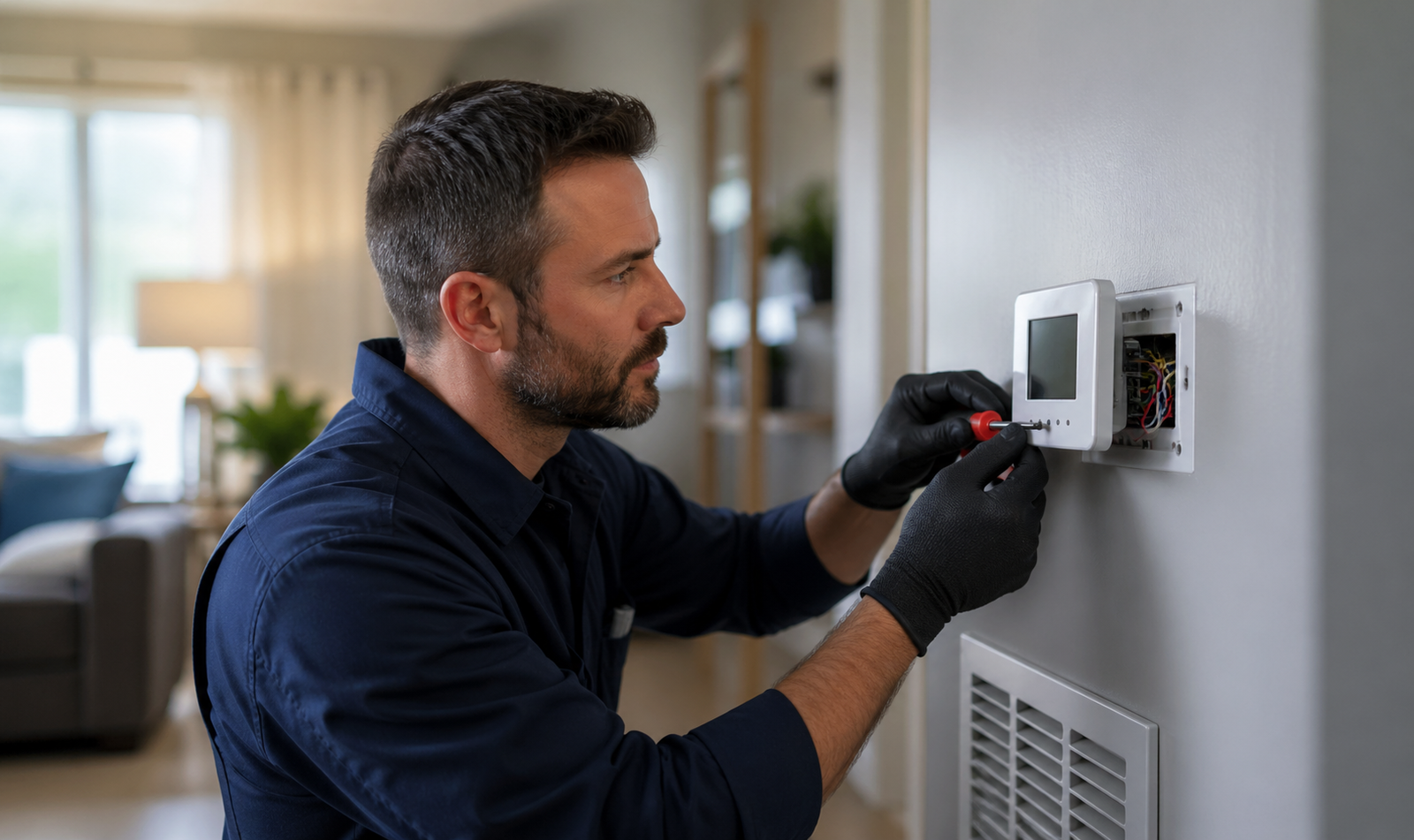
Many homeowners assume a thermostat problem is simple because the device on the wall looks small and straightforward. In reality, thermostat and control issues can affect the entire heating and cooling system in ways that are not always easy to trace. A room that feels too warm, a system that turns on too often, or equipment that does not respond at all may indicate wiring, sensor, or setting issues, communication faults, or hidden equipment-side problems. What looks like a minor control issue can change comfort, energy use, and equipment strain across the home. That is why these problems often require more careful attention than many people expect.
Why Control Problems Spread
- The Problem Is Not Always the Thermostat Itself
One reason thermostat and control issues often need professional attention is that the thermostat is only one part of a larger system. When indoor comfort feels off, homeowners may assume the wall control has failed, but the real cause may sit elsewhere in the circuit or inside the HVAC equipment. Loose wiring, failing control boards, sensor errors, low-voltage power problems, shorted components, or communication faults between system parts can all produce symptoms that appear to start at the thermostat. In some homes, the screen still lights up and settings still change, yet the system cycles at the wrong times or fails to hold the chosen temperature. That can mislead people into replacing the thermostat without solving the real issue. Professional attention matters because the technician can test how commands move through the system rather than judging the problem by appearance alone. Without that broader diagnosis, homeowners may waste time and money changing parts that were never at fault. At the same time, the real control problem continues to affect comfort and performance throughout the house.
- Wiring, Calibration, and Compatibility Matter More Than Expected
Another reason these issues often need trained help is that control systems depend on correct wiring, accurate calibration, and proper compatibility with the heating and cooling equipment already installed. A thermostat may look universal, but not every model communicates the same way with every system. Heat pumps, multi-stage units, zoning setups, and newer communicating systems may all require specific settings or wiring arrangements to operate correctly. A small installation error can lead to short cycling, uneven temperatures, fan problems, delayed starts, or a complete lack of response. Even when the thermostat is physically mounted and powered on, its internal settings may still be incorrect for the equipment it controls. Homeowners searching for Frisco Air conditioning repair service may find that control complaints often involve more than a simple device swap and instead require full system checks. Professional attention helps because technicians can verify voltage, terminal connections, programming, and equipment match before deciding whether the thermostat itself is actually defective. That reduces guesswork and lowers the chance of creating new control problems while trying to fix an old one.
- Control Issues Can Affect Comfort, Efficiency, and Equipment Life
Thermostat and control problems do more than make a room feel uncomfortable. They can change how long the system runs, how often it starts and stops, and whether it reaches the intended temperature without unnecessary strain. If a thermostat misreads room conditions or sends improper commands, the equipment may run too long, shut off too early, or switch on more often than it should. Over time, that can increase energy use and place extra wear on motors, contactors, compressors, and other system parts. In some cases, the homeowner notices only the visible symptoms, such as uneven cooling or rising utility bills, while the system continues to operate under poor instructions day after day. Professional attention becomes important because the issue is no longer just about the control on the wall. It becomes a system performance problem that can affect reliability across seasons. By testing readings, cycles, response timing, and connected components, a technician can determine whether the controls are supporting healthy operation or quietly causing larger trouble behind the scenes.
Proper Diagnosis Protects the Whole System
Thermostat and control issues often require professional attention because they lie at the center of how an HVAC system operates, responds, and maintains comfort. Even a small fault in settings, wiring, calibration, or communication can create symptoms that seem simple while hiding a broader system problem. When these issues are guessed at rather than properly tested, the result may be recurring discomfort, higher operating costs, and avoidable wear on the equipment. Professional diagnosis helps separate a true thermostat failure from wiring faults, sensor problems, or deeper control issues elsewhere in the system. That careful approach protects both comfort and equipment condition over the long run.