
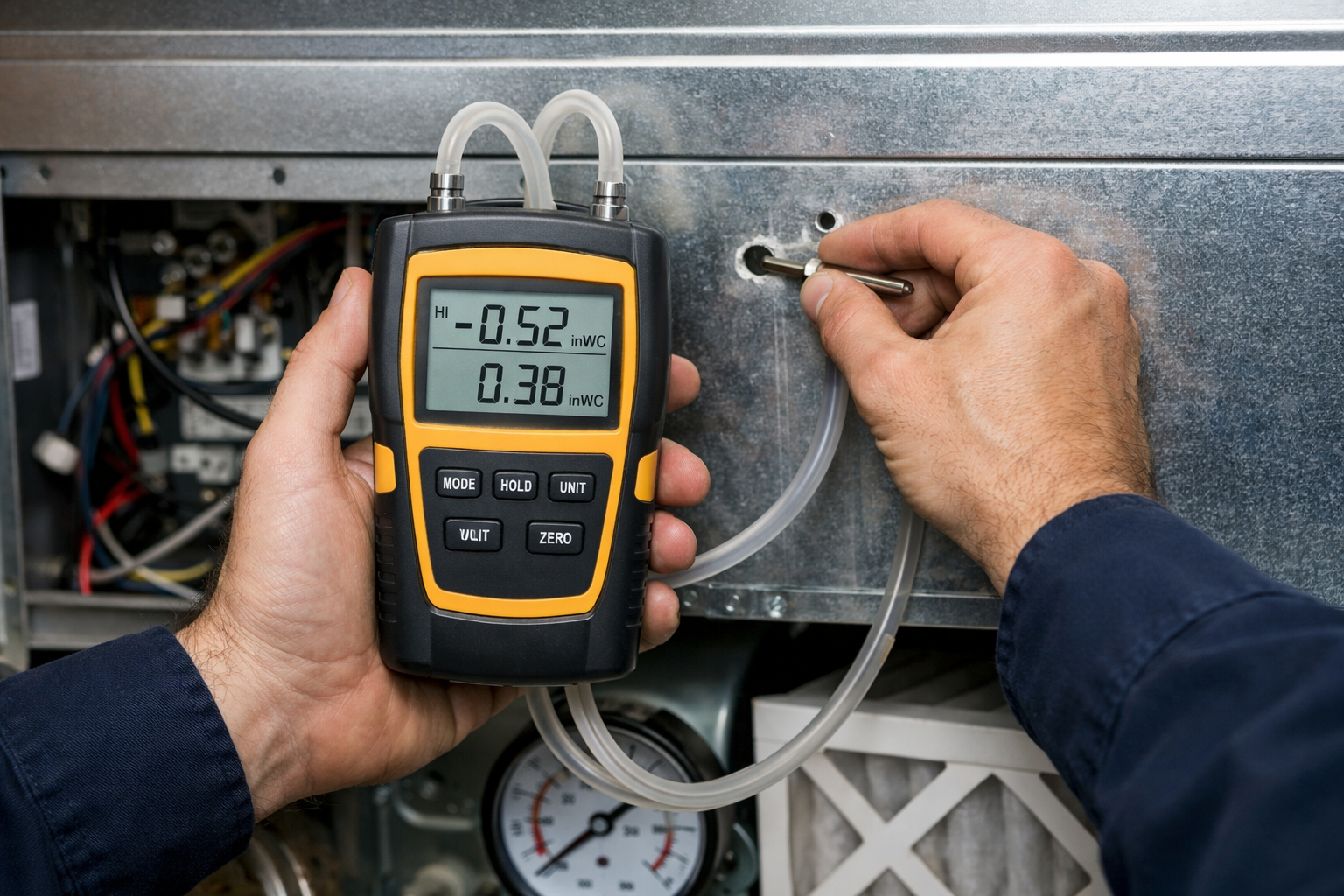
Some heating and cooling problems appear to be equipment failures when the real issue lies in the airflow system. A homeowner may notice poor comfort, high utility bills, noisy operation, or rooms that never seem to reach the thermostat setting, and then assume a larger unit or a major replacement will solve everything. But changing equipment without understanding how air moves through the system can create new problems or leave the original ones in place. That is why HVAC contractors often check static pressure before recommending major system changes. It helps reveal whether the duct system is allowing the equipment to operate properly or working against it.
What static pressure reveals
- Static Pressure Shows How Hard the System Is Working to Move Air
Static pressure is one of the clearest ways to understand how the air distribution system affects the equipment. It reflects the resistance the blower faces as it pushes and pulls air through the return ducts, filter, coil, supply ducts, and registers. When that resistance is too high, the system may still run, but it does not move air the way it was designed to. That matters because heating and cooling equipment depend on proper airflow to transfer heat effectively and maintain stable operation. If a contractor is considering a new air handler, furnace, coil, or major system reconfiguration, static pressure helps determine whether the existing ductwork and airflow setup can support the change. Without that information, the contractor may be making decisions based only on surface symptoms such as short cycling, temperature imbalance, or poor comfort. Those symptoms can be misleading. A system that seems undersized or worn out may actually be struggling because the blower is pushing against excessive restriction. By measuring static pressure first, the contractor gains a clearer picture of whether the equipment is truly the problem or airflow conditions are distorting the system’s performance.
- Major Equipment Changes Can Fail if Airflow Problems Stay Hidden
A major HVAC change is rarely successful when airflow restrictions remain unresolved. If a contractor installs new equipment onto a system with high static pressure, the new components may inherit the same problems that affected the old setup. The homeowner may expect quieter operation, stronger airflow, and better comfort, only to find that certain rooms still feel off and the equipment still runs under strain. Restrictions can come from undersized return ducts, overly restrictive filters, dirty coils, crushed duct runs, closed dampers, poor register design, or supply paths that cannot handle the airflow the blower is trying to move. Measuring static pressure before making changes helps identify these hidden limits. Some contractors discussing Vancouver, WA HVAC service by Sarkinen Heating and Cooling also emphasize that airflow testing can prevent the installation of expensive upgrades on a system with unresolved duct resistance. This matters because major system changes are not just about replacing metal boxes. They involve matching equipment performance to the real conditions inside the home. If the airflow path is flawed, even newer equipment can suffer from efficiency loss, noise issues, comfort complaints, and reduced service life. Static pressure testing helps prevent those mistakes from being built into the next installation.
- Static Pressure Helps Contractors Make Smarter Design Decisions
Checking static pressure is also important because it guides a contractor’s design of the next step. A major system change may involve replacing the blower, resizing equipment, adding zoning, updating filtration, or improving indoor air quality components. Each of those changes affects airflow resistance. If the contractor does not know the existing static pressure profile, it becomes much harder to predict how those additions will affect total system performance. A stronger filter cabinet, for example, may improve air quality but also increase resistance if the return side is already struggling. A higher-capacity piece of equipment may appear to solve comfort issues. Still, it can create a worse airflow imbalance if the duct system cannot properly deliver the added volume. Static pressure provides a measurable baseline that supports better decision-making. It helps the contractor determine whether duct modifications, return upgrades, or other airflow improvements should happen before or alongside the equipment change. That approach creates a more complete solution. Instead of treating the equipment as if it works independently from the duct system, the contractor is evaluating how all parts of the system interact. This often leads to recommendations that are more accurate, more durable, and better aligned with how the home actually handles moving air.
Why the Pressure Check Comes First
An HVAC contractor checks static pressure before making major system changes because airflow resistance directly affects comfort, efficiency, equipment reliability, and installation success. Without that measurement, it is easy to blame the equipment for problems that actually begin in the duct system or airflow path. Static pressure testing helps identify restrictions, supports better design decisions, and protects homeowners from investing in major upgrades that do not address the root cause. It turns the recommendation process into a measured evaluation instead of an assumption. When contractors understand how hard the system works to move air, they can make changes that improve performance in a way that is more comprehensive, more practical, and more likely to last.
Also Read: Why Is Family Involvement Important During the Addiction Treatment Process?