
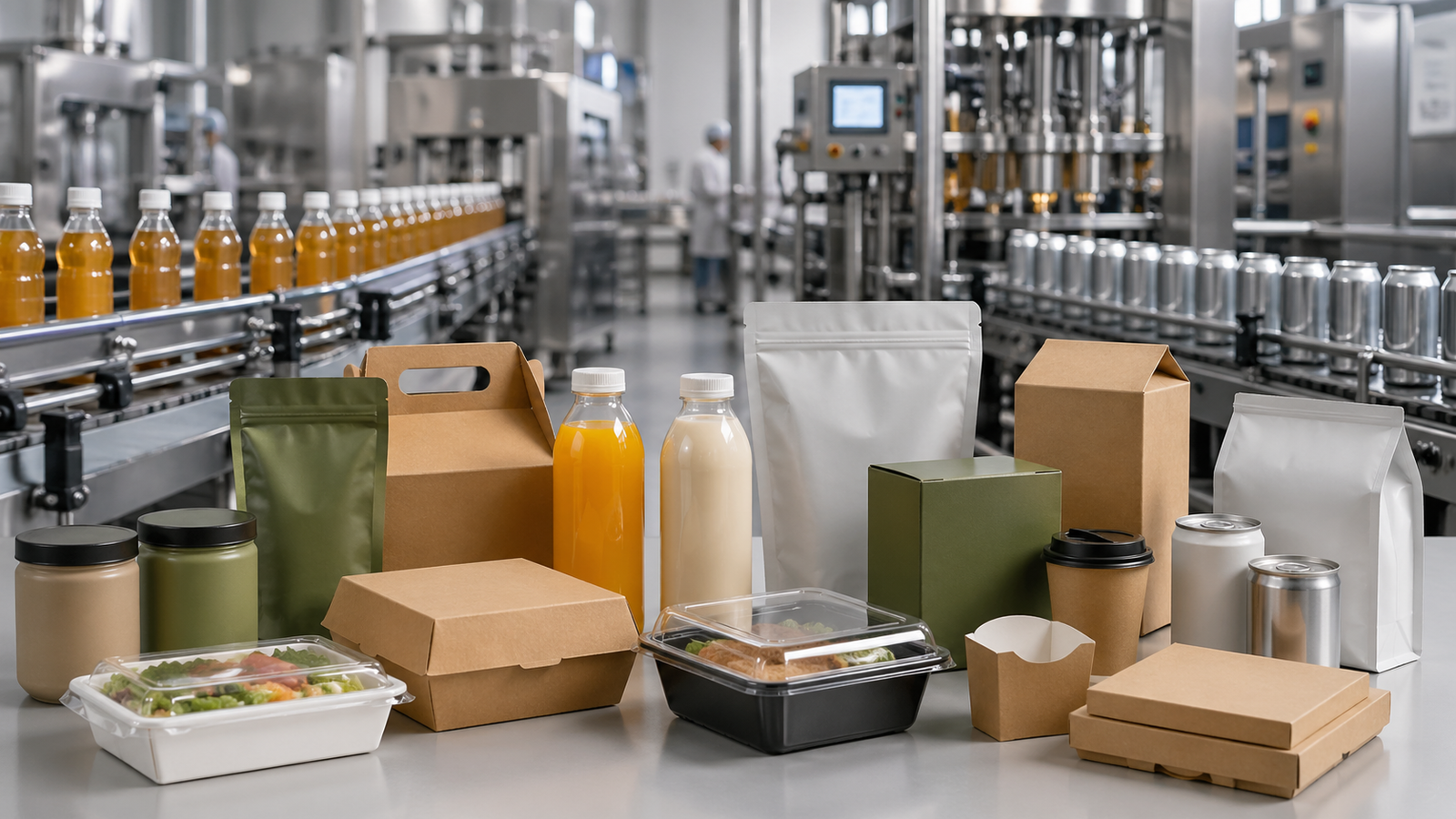
In the food and beverage industry, packaging is not just a supporting element—it is a critical part of product safety, operational efficiency, and brand identity. For businesses operating at scale, especially in manufacturing, retail distribution, and e-commerce, packaging must perform consistently across thousands or even millions of units.
Unlike small-batch operations, high-volume production introduces new challenges. Packaging must protect the product, meet safety standards, maintain freshness, and remain consistent in appearance across every unit. This is where food & beverage packaging solutions become essential.
From food packaging boxes to flexible pouches and containers, the focus is no longer just on packaging design. It is on creating systems that support scalability without compromising safety or brand consistency.
Why Packaging Is Critical in High-Volume Food Production
In large-scale food production, even minor packaging issues can quickly become major problems. A small flaw in sealing, material quality, or structure can lead to product spoilage, contamination, or returns at scale.
This is why food packaging must meet strict safety and quality standards. It is responsible for protecting products from moisture, air, and external contaminants while maintaining freshness during storage and transportation.
For beverages and liquid-based products, packaging must also prevent leakage and maintain structural integrity under pressure. This makes material selection and design critical for performance.
At scale, consistency is key. Every unit must meet the same quality standards to ensure reliability across the supply chain.
The Role of Size and Structure in Packaging Efficiency
The efficiency of food & beverage packaging depends heavily on its dimensions. The balance of length, width, and height determines how well products fit inside packaging and how efficiently they can be packed, stored, and transported.
Oversized packaging increases material usage and shipping costs. It also creates empty space that can affect product stability. Undersized packaging can compromise product safety and make handling difficult.
Proper sizing ensures that products are securely held while optimizing space utilization. This is particularly important for high-volume operations where small inefficiencies can lead to significant cost increases.
Packaging Efficiency Comparison
| Packaging Type | Impact on Operations | Result |
| Oversized packaging | Increased material and shipping volume | Higher costs and inefficient storage |
| Undersized packaging | Product compression or leakage risk | Safety issues and product damage |
| Optimized packaging | Balanced fit and efficient use of space | Lower cost and improved performance |
Safety and Compliance in Food Packaging
Food safety is one of the most important aspects of packaging. Materials used in food & beverage packaging must comply with regulatory standards to ensure they are safe for direct or indirect contact with food.
This includes resistance to contamination, proper sealing mechanisms, and protection from environmental factors. Packaging must also maintain product integrity during transportation and storage.
For high-volume producers, compliance is not optional. It is a requirement for operating in regulated markets. Failure to meet safety standards can lead to product recalls, financial losses, and reputational damage.
This is why businesses invest in packaging solutions that meet both local and international compliance requirements.
Maintaining Brand Consistency at Scale
In the food and beverage industry, brand consistency plays a major role in customer trust. Customers expect the same product quality and presentation every time they make a purchase.
Packaging is a key part of this consistency. Custom food packaging ensures that every unit looks the same, regardless of production volume. This includes consistent colors, printing quality, and structural design.
For brands operating across multiple locations or distribution channels, maintaining this consistency is critical. It reinforces brand identity and builds customer confidence.
Why Custom Packaging Improves High-Volume Operations
Custom packaging is designed to meet specific product and operational requirements. For high-volume production, this provides several advantages.
First, it improves packing efficiency. When packaging is designed to fit the product perfectly, it reduces the need for adjustments during packing. This speeds up production lines and reduces labor costs.
Second, it improves product protection. Properly designed packaging reduces movement and prevents damage during transportation.
Third, it supports branding. Custom printed packaging ensures that branding remains consistent across all units, which is essential for large-scale operations.
Materials Used in Food & Beverage Packaging
Different types of materials are used depending on the product. Cardboard food packaging, flexible pouches, and rigid containers are commonly used in the industry.
For dry products, materials that provide moisture resistance are essential. For liquids, packaging must be leak-proof and durable. For perishable items, packaging must support freshness and temperature control.
Selecting the right material is critical for both safety and performance. It must align with the product’s requirements while also supporting scalability.
Challenges with Standard Packaging Solutions
Standard packaging solutions are often not suitable for high-volume operations. They are designed for general use and may not meet the specific needs of large-scale production.
This can lead to inefficiencies such as increased material usage, inconsistent product fit, and higher shipping costs. Over time, these issues can impact profitability.
Custom solutions provide a better alternative by addressing these challenges directly. They allow businesses to optimize packaging for both performance and cost.
Logistics and Storage Optimization
Efficient packaging design plays a major role in logistics and storage. Properly sized packaging reduces wasted space in warehouses and during transportation.
For high-volume operations, this can lead to significant cost savings. It also improves inventory management by allowing more products to be stored in the same space.
Packaging that is easy to stack and handle further improves efficiency across the supply chain.
Sustainability in Food & Beverage Packaging
Sustainability is becoming increasingly important in the food industry. Many brands are adopting eco-friendly packaging solutions to reduce environmental impact.
This includes using recyclable materials, reducing packaging waste, and optimizing design for efficiency. Sustainable packaging not only benefits the environment but also improves brand perception.
For large-scale operations, sustainability must be balanced with performance. Packaging must remain effective while meeting environmental goals.
Why Investing in Better Packaging Pays Off
For high-volume food and beverage brands, packaging is not just a cost—it is a critical investment. High-quality packaging reduces product loss, improves efficiency, and enhances brand consistency.
Over time, these benefits lead to lower operational costs and better customer satisfaction. Businesses that invest in proper packaging systems are better positioned to scale and compete in the market.
Final Thoughts
Food & beverage packaging is a key factor in the success of high-volume production. It must balance safety, efficiency, and brand consistency while meeting regulatory requirements.
By focusing on proper dimensions, material selection, and custom design, businesses can create packaging systems that support long-term growth. The balance of length, width, and height ensures efficient use of resources and reliable performance.
Companies like Custom Packaging Pro are helping brands develop food & beverage packaging solutions that meet the demands of large-scale production while maintaining safety, consistency, and efficiency.
FAQs
Why is packaging important in food production?
It ensures product safety, maintains freshness, and protects against contamination.
What materials are used in food & beverage packaging?
Common materials include cardboard, plastic, and flexible packaging films.
How does packaging affect brand consistency?
Consistent packaging design helps maintain a uniform brand image across all products.
Can custom packaging improve efficiency?
Yes, it reduces packing time, improves product fit, and lowers operational costs.
Is eco-friendly packaging suitable for large-scale production?
Yes, many sustainable materials are designed to meet both performance and scalability requirements.
Also Read: Susanne Gregard: The Untold Story Behind Fame Privacy and a Life Beyond the Spotlight