
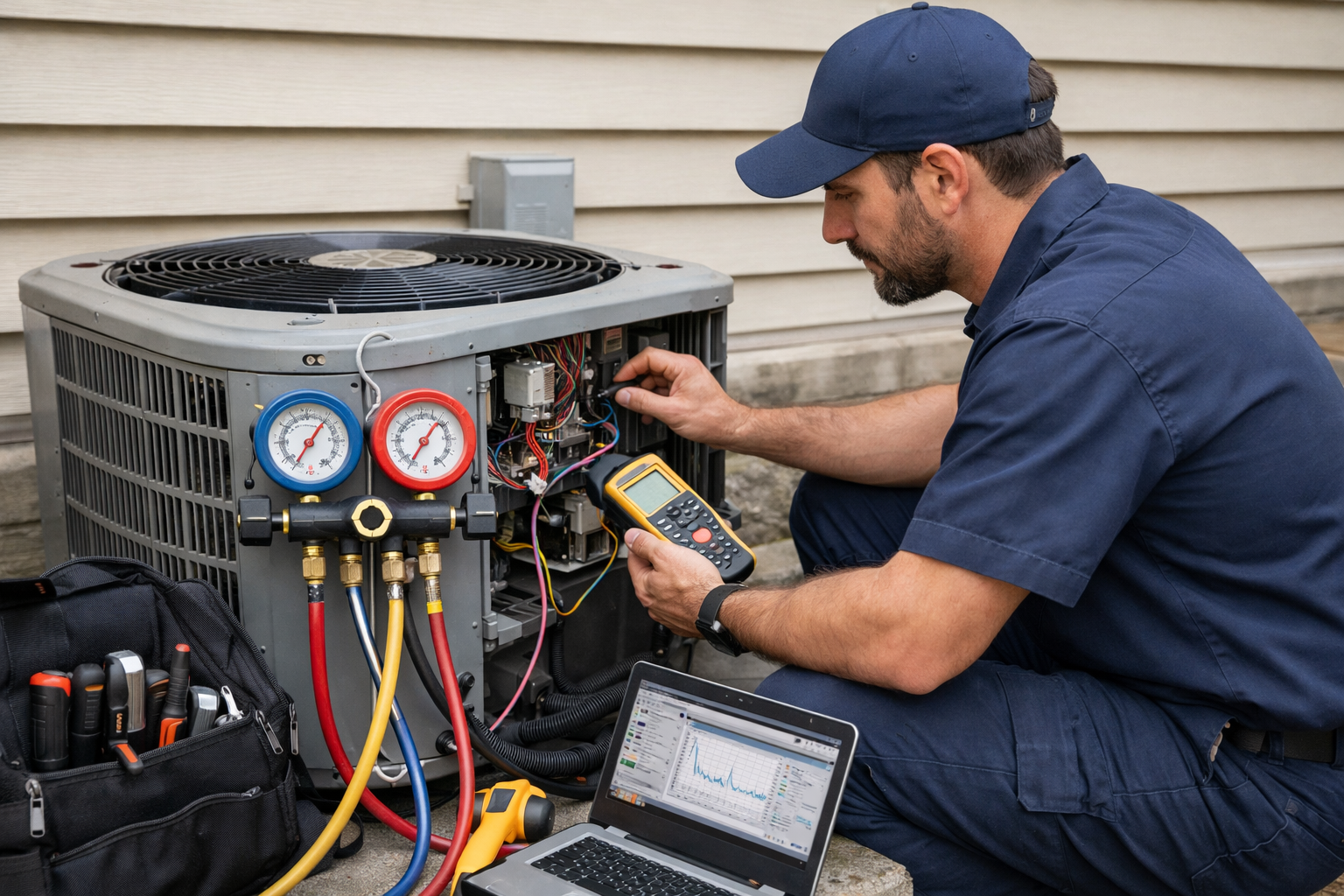
Ensuring your air conditioning system operates efficiently requires careful attention, especially when it shows signs of reduced performance or unusual behavior. A professional AC diagnostic visit can provide a detailed assessment of your system, uncover potential issues, and outline necessary solutions. Understanding what happens during this process can help homeowners prepare and maximize the value of the service. We will explore the key aspects of a professional AC diagnostic visit, from initial inspections to system testing, offering insight into what homeowners should anticipate and how they can actively participate in the process to ensure long-term comfort and efficiency.
Initial Assessment and Visual Inspection
The first step of a professional AC diagnostic visit with Evans Heating & Cooling involves a thorough visual inspection of the entire system. Technicians begin by examining both the indoor and outdoor units for visible signs of wear, damage, or improper installation. This includes checking for leaks in refrigerant lines, inspecting electrical connections, evaluating the condition of the coils, and observing the physical integrity of components such as the blower fan and air filters. The goal is to identify obvious issues that might affect system performance, such as dirty filters, loose wiring, or blocked airflow. Technicians also look for environmental factors that could impact efficiency, including debris around outdoor units or obstructions in ductwork. This initial assessment provides a foundation for the more technical steps of the diagnostic process, ensuring that nothing critical is overlooked before advanced testing begins.
System Performance Testing
After the visual inspection, the technician will conduct a series of performance tests to evaluate how effectively the AC system is cooling your home. These tests often include measuring the temperature difference between the air entering and leaving the system, assessing airflow rates, and checking the operational efficiency of the compressor and fan motors. Additionally, the technician may analyze refrigerant levels to ensure they match manufacturer specifications, as imbalances can indicate leaks or other malfunctions. Electrical components such as capacitors, relays, and thermostats are also tested to confirm they function properly and safely. By measuring these variables, the technician can determine whether your system is operating at peak efficiency, identify hidden problems, and recommend corrective actions. Homeowners can benefit from understanding these measurements, as they reveal the system’s true health and highlight areas that may require attention before costly breakdowns occur.
Detailed Diagnosis and Recommendations
Following performance testing, the technician will interpret the data collected during inspections and tests to form a comprehensive diagnosis. This stage involves identifying underlying issues that may not be immediately visible, such as compressor wear, coil degradation, or minor refrigerant leaks. Technicians also consider the system’s age and maintenance history, as older units may require more frequent monitoring or gradual component replacement. Based on the findings, the technician provides recommendations for repair, maintenance, or system upgrades, prioritizing actions that will improve efficiency, extend the system’s lifespan, and prevent emergency failures. Homeowners are encouraged to ask questions during this phase to fully understand the suggested solutions, the expected outcomes, and potential costs. Clear communication ensures that the proposed plan aligns with both the household’s comfort needs and budget considerations.
Maintenance and Preventive Guidance
A professional AC diagnostic visit often concludes with guidance on ongoing maintenance practices that can preserve system efficiency and reliability. Technicians may advise on filter replacement schedules, cleaning or treating coils, lubricating moving parts, and inspecting ductwork for leaks or blockages. They may also suggest seasonal checkups, especially before periods of heavy use, to prevent unexpected breakdowns. Preventive guidance extends beyond mechanical advice, including recommendations for using a smart thermostat, controlling humidity, and managing airflow within the home to reduce strain on the AC system. Homeowners who follow these guidelines often experience fewer performance issues, lower energy bills, and improved indoor comfort. The proactive maintenance information provided during a diagnostic visit empowers homeowners to take an active role in the long-term care of their air conditioning system, enhancing both reliability and efficiency.
A professional AC diagnostic visit provides more than just a routine inspection; it is an in-depth evaluation of your system’s overall health and operational performance. From initial visual inspections to detailed testing and preventive guidance, each stage of the visit is designed to identify issues early, optimize system efficiency, and provide homeowners with actionable recommendations. Understanding what to expect during this process can help homeowners prepare for the technician’s arrival, engage in meaningful discussions about findings, and make informed decisions about repairs or maintenance. Regular diagnostic visits not only prevent costly breakdowns but also ensure your air conditioning system delivers consistent comfort and reliability year-round, maintaining a healthy, efficient home environment.
Also Read: Scaling International Operations Through Panama Company Registration Services