
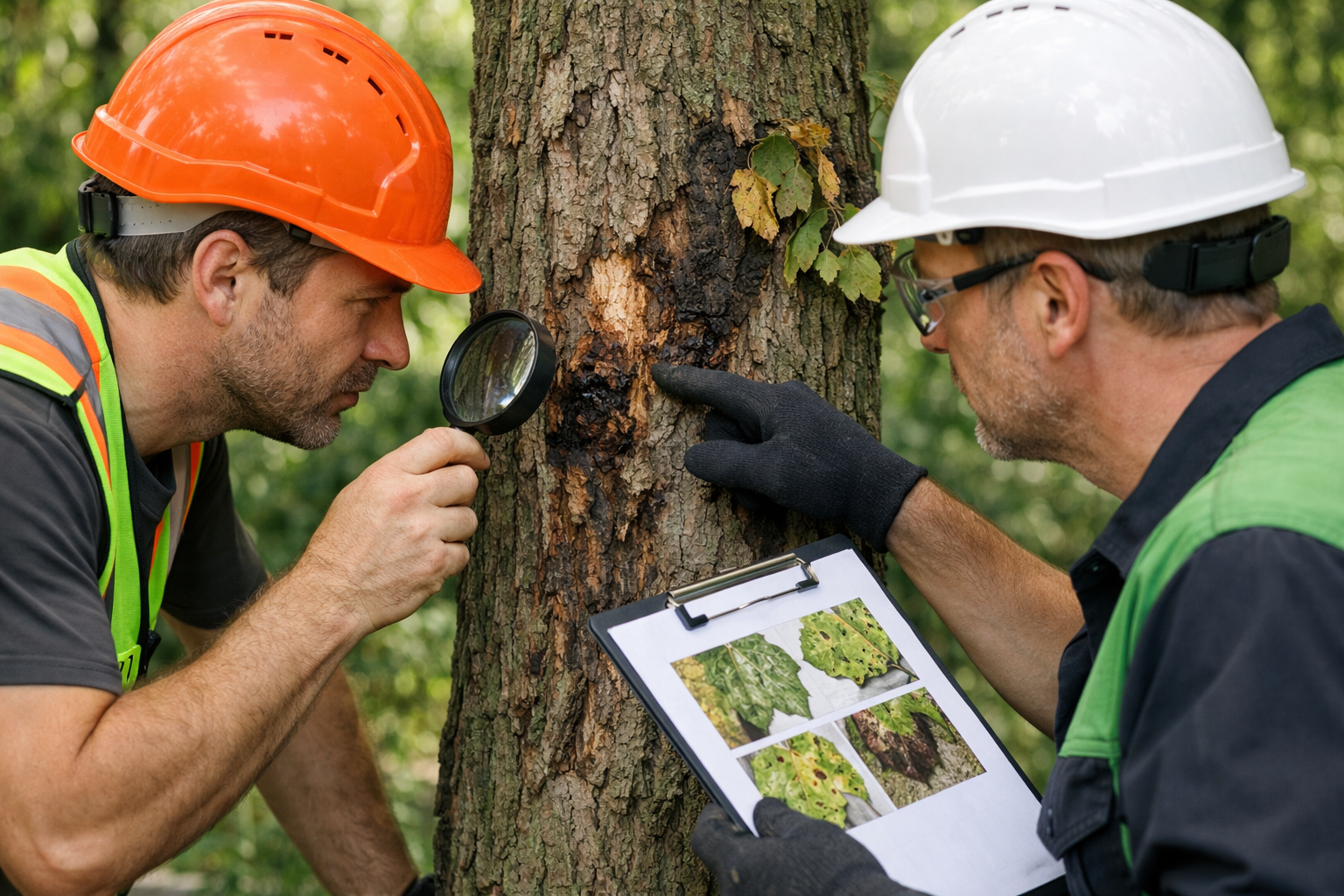
Tree disease rarely begins with a dramatic collapse or a clearly dying canopy. In many cases, the earliest signs are subtle enough that property owners assume the tree is only reacting to weather, seasonal stress, or temporary insect activity. That is why trained tree service professionals pay close attention to early changes in leaf color, bark texture, branch growth, and root-zone conditions before the problem becomes widespread. Catching disease in its early stages can protect nearby trees, reduce safety risks, and improve the chances of preserving the affected tree. Early identification is less about guesswork and more about reading patterns that suggest decline is beginning.
How Problems First Appear
- Reading the Canopy for Early Stress
Tree service professionals often begin by studying the canopy because disease usually affects a tree’s growth and foliage retention before more severe damage becomes obvious. Leaves may appear smaller than normal, develop unusual spotting, curl at the edges, or change color too early in the season. In some cases, one section of the canopy thins out. At the same time, the rest of the tree still looks reasonably healthy, which can signal that the problem is not general seasonal stress but a developing issue in one part of the vascular system. Professionals compare leaf density, color distribution, and branch vitality across the crown because uneven decline often reveals more than uniform change. They also pay attention to dead twigs at branch tips, reduced shoot growth, and canopy areas that fail to leaf out as expected. These symptoms matter because the disease often disrupts the tree’s ability to move water and nutrients long before the trunk shows obvious damage. What appears minor from the ground may point to a deeper issue involving fungal infection, bacterial spread, root trouble, or internal decay beginning to affect the tree’s ability to support healthy growth. Early canopy inspection helps professionals determine whether the symptoms indicate a manageable problem, an advancing disease process, or stress that may invite further infection if left unaddressed.
- Examining Bark, Branches, and Trunk Changes
The trunk and branch structure can reveal disease patterns that foliage alone does not explain. Tree service professionals inspect bark for cracking, peeling, sunken areas, cankers, unusual moisture, and sections that seem loose or discolored compared with the surrounding surface. They also look for fungal growth, oozing sap, and small wounds that may have become entry points for disease organisms. Branch unions are closely inspected because weak attachment points or decayed tissue can appear there before a homeowner notices a structural problem. A service provider discussing Springfield Tree Service may point out that early disease detection often depends on noticing slight bark changes that most people would never connect to internal decline. Professionals also tap or probe areas that appear hollow, softened, or decayed to understand whether the problem is only on the surface or extending into the wood beneath. The pattern of branch dieback matters as well. If certain limbs are declining faster than others, it may indicate that infection is moving through one part of the tree rather than affecting the entire canopy equally. These visual and physical clues help narrow the cause and guide the next step, whether that means pruning infected limbs, improving site conditions, monitoring progression, or recommending removal before the disease spreads further or weakens the tree structurally.
- Looking at Soil, Roots, and Surrounding Conditions
Tree disease does not always begin above ground, which is why professionals also evaluate the tree’s environment rather than focusing only on visible symptoms. Root stress, compacted soil, drainage problems, and repeated moisture imbalance can all weaken a tree and make it more vulnerable to disease. Tree service professionals inspect the base of the trunk for root flare issues, fungal activity, girdling roots, soft ground, or decay near the collar, where many serious problems begin. They also consider whether the tree has been affected by construction, mower injury, grade changes, or nearby hardscaping that has altered water movement and oxygen availability in the soil. In some cases, canopy symptoms are only the visible result of a root system already under stress for months or even years. Professionals also look at nearby trees and plants, since patterns across the landscape can reveal whether the problem is isolated or part of broader disease pressure affecting that species in the area. Timing matters too. A tree that drops leaves early, struggles to recover during a growing season, or responds poorly after periods of heavy rain or drought may be showing weakness that allows pathogens to spread more easily. By connecting soil conditions, root health, and visible crown symptoms, professionals can make a more accurate judgment about what is happening and how quickly it may progress.
Why Early Identification Protects More Trees
Tree service professionals identify early signs of disease before it spreads by paying attention to patterns that develop gradually across the canopy, bark, trunk, roots, and surrounding landscape. Small changes in leaf color, branch dieback, bark texture, or soil condition can reveal a problem long before the tree appears to be in obvious decline. That early diagnosis matters because the disease becomes harder to contain once it progresses through the tree’s structure or spreads to nearby plantings. Careful inspection helps guide the right response early, which can reduce damage, improve tree stability, and protect the overall health of the property.