
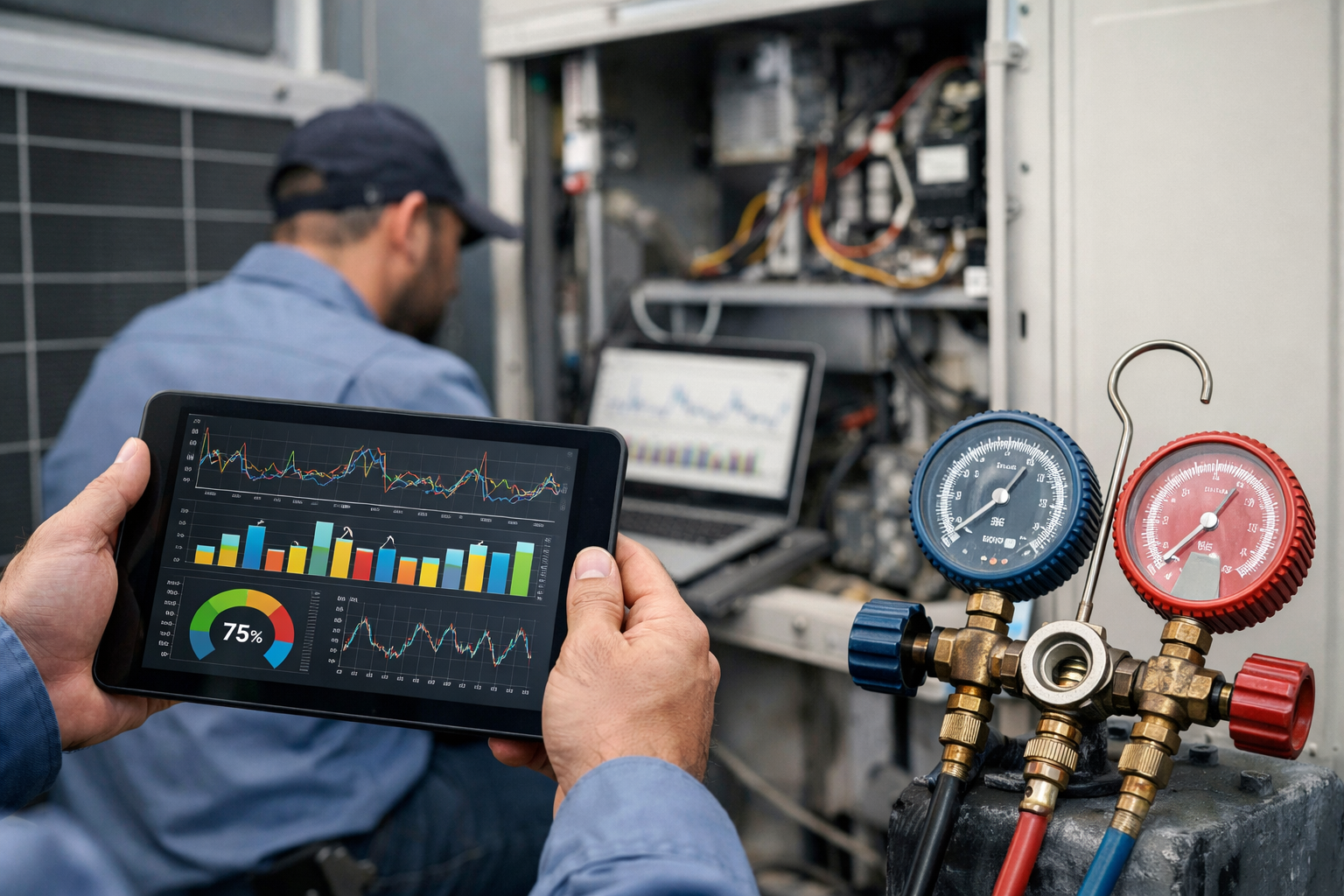
An HVAC system tells a story through how long it runs, how often it starts, and how quickly it shuts down. Many homeowners focus only on whether the unit turns on, but contractors pay attention to runtime patterns because they reveal how the system performs under real-world conditions. A unit that runs too long, shuts off too quickly, or cycles unevenly can point to problems that are not obvious during a brief inspection. Runtime behavior helps contractors move beyond guesswork and identify whether the issue comes from airflow, controls, equipment condition, duct losses, or the home itself.
What Runtime Can Reveal
- Long Cycles Often Point to Hidden Strain
When HVAC contractors analyze runtime patterns, one of the first things they want to know is whether the system is running longer than it should for the weather and the home’s demand. Long cycles can indicate that the equipment is still operating but struggling to deliver sufficient heating or cooling to satisfy the thermostat within a reasonable time. That may happen due to restricted airflow, dirty coils, low refrigerant levels, duct leaks, insulation gaps, or excessive heat gain inside the house. A contractor does not treat long runtime as a problem by itself. Instead, it becomes a clue that leads the inspection in a more focused direction. If the system runs almost constantly in moderate weather, that suggests the issue may be deeper than simple seasonal demand. Contractors compare the runtime to indoor comfort conditions, room-to-room balance, and the equipment’s responses over the full cycle rather than just at startup. Homeowners searching for Air Conditioning Repair in Rowlett often come to understand that prolonged system operation is not always a sign of hard work alone. Still, they can also indicate that the system is compensating for a hidden performance issue. By studying long cycles carefully, contractors can see where efficiency is being lost and where the unit is being forced to work beyond normal expectations.
- Short Cycling Can Expose Control and Capacity Problems
Runtime analysis is also useful when the system turns on and off too frequently. Short cycling may seem less serious than a system running all day, but contractors know it can be just as revealing. A unit that shuts down before completing a normal cycle may be reacting to thermostat placement issues, overheating, frozen coils, electrical control faults, oversized equipment, or safety switches being triggered during operation. Frequent starts and stops also place stress on components, reduce efficiency, and make it harder for the system to maintain stable indoor temperatures. Contractors closely monitor the timing of these cycles. If the unit starts, runs for only a few minutes, and stops repeatedly, that tells them something very different from a system that runs for long stretches but still struggles to keep up. The timing, frequency, and consistency of each cycle help narrow the diagnostic path. Short cycles may also explain why humidity stays high, rooms feel unevenly heated or cooled, or energy bills rise even when the home does not seem to be using much heating or cooling. Instead of replacing parts based on assumptions, contractors use runtime behavior to understand how the system is interacting with the thermostat, the duct system, and the indoor load. That makes the diagnosis far more grounded in actual operating conditions.
- Runtime Patterns Connect Symptoms to Root Causes
One reason contractors value runtime analysis so much is that it helps connect scattered comfort complaints into one larger pattern. A homeowner may mention weak airflow in one room, rising utility bills, warm indoor temperatures in late afternoon, or a system that seems noisier than usual. Each of those symptoms matters, but runtime behavior helps show whether they are all tied to the same underlying cause. A contractor may find that the system runs long because the return airflow is restricted, or that it short-cycles because a safety control is reacting to high temperature or pressure. In other cases, runtime patterns reveal that the home itself is contributing to the issue through duct leakage, poor insulation, solar heat gain, or air leakage around windows and doors. These patterns also help contractors determine whether the equipment is responding normally for the season or operating under avoidable strain. Runtime is one of the few clues that reflects how the full system behaves over time rather than during one isolated moment. That makes it valuable for diagnosing problems that appear intermittent, inconsistent, or difficult to reproduce on command. By analyzing runtime alongside pressure, temperature, airflow, and homeowner observations, contractors build a more complete and accurate picture of system performance.
Why Runtime Analysis Matters
HVAC contractors analyze runtime patterns because system behavior over time often reveals more than a quick visual inspection ever could. Long cycles, short cycles, and uneven operating patterns help identify hidden issues affecting comfort, efficiency, and equipment reliability. Instead of treating runtime as just a symptom, contractors use it as a diagnostic tool to identify airflow restrictions, control faults, duct problems, capacity concerns, or home efficiency issues. This leads to more accurate service decisions and reduces the chance of fixing the wrong problem. When runtime patterns are understood correctly, the system’s real weaknesses become much easier to find and address.