
A backed-up drain is easy to treat as a one-time mess. Run a snake, clear the line, and move on. But when the same drain or group of drains keeps backing up, the problem is rarely random. Repeated backups usually mean the original cause was never fully identified, or a larger issue in the system is continuing to build pressure behind the scenes. For property managers, facility teams, and building owners, the real cost is not just the plumbing call. It is the repeated disruption, cleanup, tenant frustration, and risk of hidden pipe damage that follows every temporary fix.
What The Pattern Usually Reveals
- Why Backups Keep Coming Back
A plumber looking at repeated drain backups starts with one basic principle: the visible clog is not always the real cause. A sink, floor drain, or toilet may be where the problem appears, but the restriction could be deeper in the branch line, farther down the main, or tied to how the drainage system is vented and sloped. That is why surface symptoms can be misleading. A single fixture overflowing may suggest a local blockage, while repeated problems across nearby fixtures often point to a larger drainage failure developing somewhere beyond the immediate drain opening.
- Where The Trouble First Shows
This is where experience with recurring service calls matters. A plumber from a Plumbing Company in Abington or any similar service operation dealing with older residential and mixed-use properties knows that repeated backups often leave a pattern before they reveal a cause. If the lowest fixture backs up first, if gurgling happens before overflow, or if the issue returns after heavy water use rather than immediately, those details help narrow the diagnosis. Patterns matter because they distinguish a simple stoppage from a systemic problem that will keep recurring until it is corrected at the source.
- Fixture Clogs Are Not Always Isolated
Many owners assume that repeated backups are caused by the same everyday items each time, such as hair, grease, paper products, or food waste. Sometimes that is true, especially when one sink or tub is affected. But plumbers do not stop at assumption when a drain has become a recurring problem. They test whether the blockage is truly local or if the fixture is merely the first point where a broader line restriction becomes apparent.
That distinction matters because an isolated sink clog and a partial main line blockage behave very differently. A local clog tends to affect one fixture consistently. A deeper blockage may first appear in a tub, floor drain, or lower-level toilet because those are the easiest points for wastewater to push back through. If the wrong diagnosis is made, the line may be opened temporarily without removing the actual obstruction farther down.
- Drain Camera Work Changes The Diagnosis
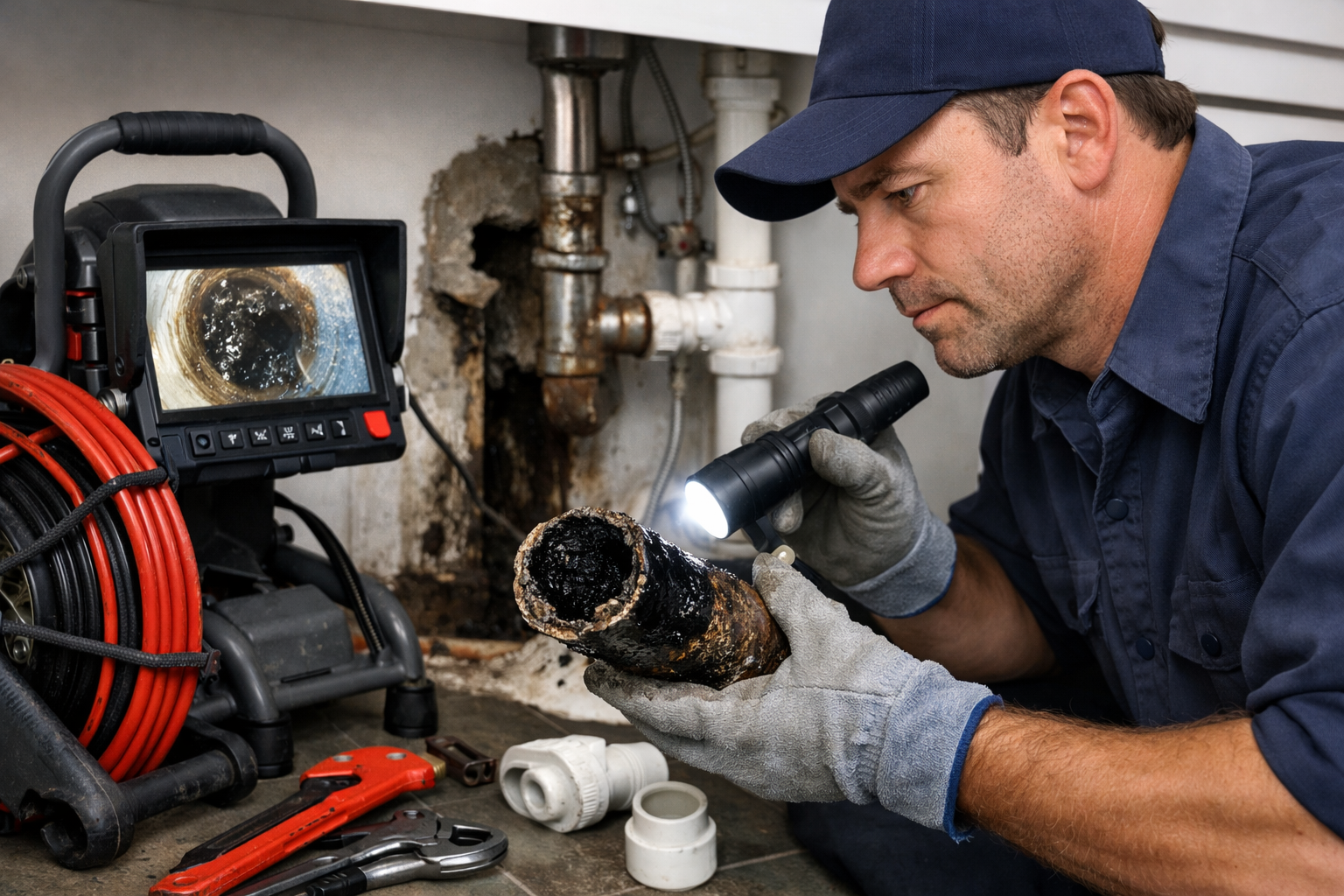
When backups keep returning, camera inspection becomes one of the most useful tools in the plumber’s process. It replaces guesswork with direct visual evidence. A drain camera can show whether the problem is grease buildup, pipe scaling, root intrusion, collapsed sections, offset joints, or standing water caused by improper slope. Without that view, repeated drain service can become a cycle of clearing symptoms rather than solving the underlying defect.
This is especially important in older properties, where years of wear can narrow pipe interiors long before a full blockage happens. Cast iron may corrode internally, clay lines may shift, and old repairs may leave uneven joints that catch debris again and again. A camera inspection helps the plumber identify not just what is blocking flow now, but why that line keeps becoming vulnerable to future backups.
- Pipe Slope And Layout Matter
Repeated drain backups are not always caused by debris alone. Sometimes the real issue is how the piping is laid out. If a drain line has an insufficient slope, wastewater slows down, reducing its ability to carry solids effectively. If there is a belly in the line, water and waste can collect in one section and create repeated stoppages over time. In commercial kitchens, multi-unit properties, and older homes with modified plumbing, these layout problems are more common than many owners realize.
A plumber pays attention to this because repeated clearing will never permanently solve a drainage line that is pitched incorrectly or has settled underground. The backup may disappear for a short period after the service, but the same weak point will continue to trap material. That is why true diagnosis often requires looking beyond the immediate clog and assessing how the whole section of pipe performs during normal drainage.
Why Real Diagnosis Saves Money
Repeated drain backups are expensive because they create the illusion of small problems while hiding larger failures in the system. A plumber identifies the real cause by tracking the pattern, testing which fixtures are affected, inspecting the line directly, and deciding whether the issue comes from debris, damage, slope, venting, or intrusion. That method is more valuable than quick relief because it prevents the property from incurring the same disruption repeatedly.
For building owners and managers, the practical goal is not simply to reopen a drain. It is to understand why that line keeps failing under normal use. Once the true cause is identified, repairs become more targeted, maintenance becomes more useful, and repeated backups stop being an accepted part of building operations.