
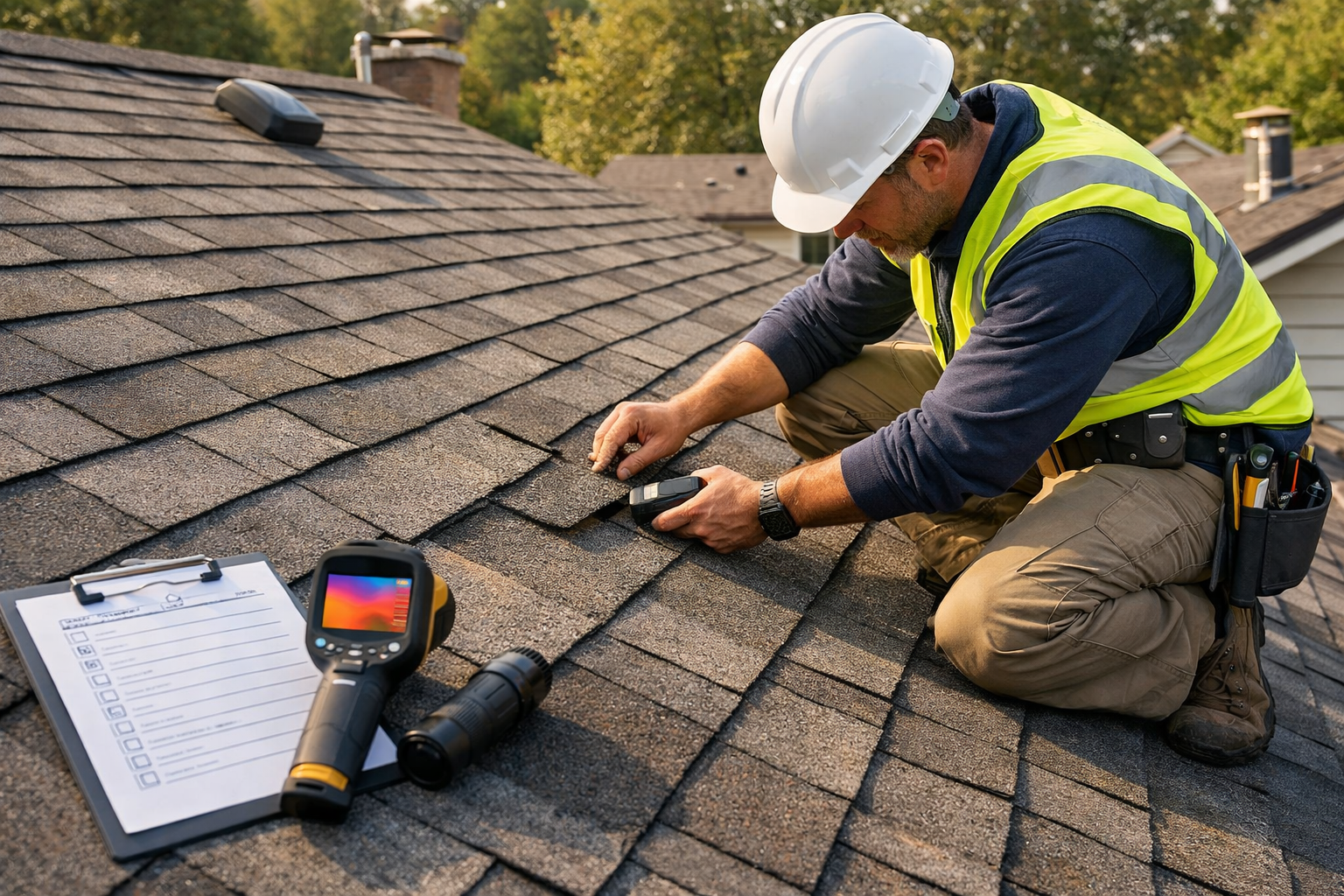
Small roof problems rarely announce themselves with a dramatic water stain at first. Long before leaks appear inside a home, the roof often shows quieter signs that something is beginning to break down. Roofing contractors are trained to recognize those early warning signs because waiting for visible interior damage usually means the problem has already progressed. Aging materials, shifting flashing, ventilation issues, moisture retention, and storm-related wear can all weaken a roofing system while the home still seems protected. That is why early inspection matters. Contractors look for subtle changes in performance and material condition that reveal risk before water intrusion turns a manageable repair into a larger structural concern.
What Contractors Notice Early
- Surface Changes That Signal Trouble
Roofing contractors often start by assessing the roof’s surface condition because many early signs of failure appear in the outer materials before water ever enters the home. Shingles may begin to curl at the edges, lose granules unevenly, crack from repeated temperature swings, or sit flatter in some areas than others due to underlying movement. On other roofing systems, contractors may notice blistering, shrinking membranes, punctures, lifted seams, or areas where drainage is slowing, allowing moisture to remain longer than it should. These issues matter because the roof does not fail all at once. It weakens in stages, and those stages can often be seen if someone knows how to read them correctly. Contractors also look at how sunlight, wind exposure, and roof pitch affect wear patterns, since damage rarely develops evenly across the entire structure. One section may age much faster because it faces stronger weather or holds heat differently throughout the day. Instead of waiting for a leak to confirm a problem, contractors interpret these surface changes as warnings that the roof is losing its ability to shed water reliably. That early understanding helps property owners act while repairs are still more focused and less disruptive.
- Flashing, Edges, and Transition Points
Some of the earliest indicators of roof failure appear not in the main field of the roof but at the points where materials meet, terminate, or change direction. Roofing contractors pay close attention to flashing around chimneys, skylights, wall intersections, vents, and valleys because these are the parts of the system that handle water movement under more complicated conditions. If flashing begins to loosen, corrode, separate, or pull away from adjoining materials, the roof may still look sound from a distance but become increasingly vulnerable to wind-driven rain. Contractors also inspect drip edges, ridge caps, exposed fasteners, sealants, and terminations for signs of deterioration in the roof’s protective details. A roof can appear intact overall while hidden trouble is already developing around these smaller transition points. That is why careful inspections often focus on the details homeowners are least likely to notice from the ground.
In many cases, Duluth roofer services from Perrault Construction involve close inspections that identify failing roof transitions before they become interior water problems. Contractors know that once these weak spots open, moisture does not need a large gap to enter the roofing assembly. Early detection at these points can prevent insulation damage, wood deterioration, and a chain of repairs that reaches well beyond the roof covering itself.
- Clues Hidden Beneath the Exterior
Roof failure does not always begin with obvious exterior damage, which is why contractors also pay attention to hidden conditions that affect a roof’s performance over time. Poor attic ventilation, trapped humidity, heat buildup, and subtle deck movement can all shorten the life of roofing materials without creating an immediate visible leak. A contractor may inspect the attic for signs of moisture staining, compressed insulation, mold growth, or daylighting at roof penetrations, all of which can indicate that the roofing system is under stress. They also look for sagging lines, soft spots underfoot, and uneven planes that suggest the decking may be weakening or moisture has already begun to affect structural components. Sometimes the issue is not damage from above but an imbalance from below, where poor ventilation allows heat and moisture to build up, causing shingles to age faster and supporting materials to deteriorate. Contractors connect these interior and structural clues to what they see on the roof surface, creating a fuller picture of the roof’s condition. That broader evaluation helps them determine whether the roof is simply aging normally or approaching failure, which would require quicker action. By the time a ceiling stain appears indoors, many of these warning signs have usually been present for a long time.
Why Early Detection Changes Everything
Roofing contractors identify early signs of roof failure by looking beyond obvious leaks and paying attention to subtle signals that indicate a system is beginning to lose reliability. Surface wear, failing flashing, drainage issues, structural movement, and attic-related moisture patterns all help reveal trouble before water reaches the living space. That early diagnosis gives homeowners a chance to repair weak areas while the damage is still limited and more affordable to address. A roof rarely shifts from healthy to failing in a single moment. It usually leaves clues along the way. Contractors who recognize those clues can help stop small defects from turning into widespread damage.