
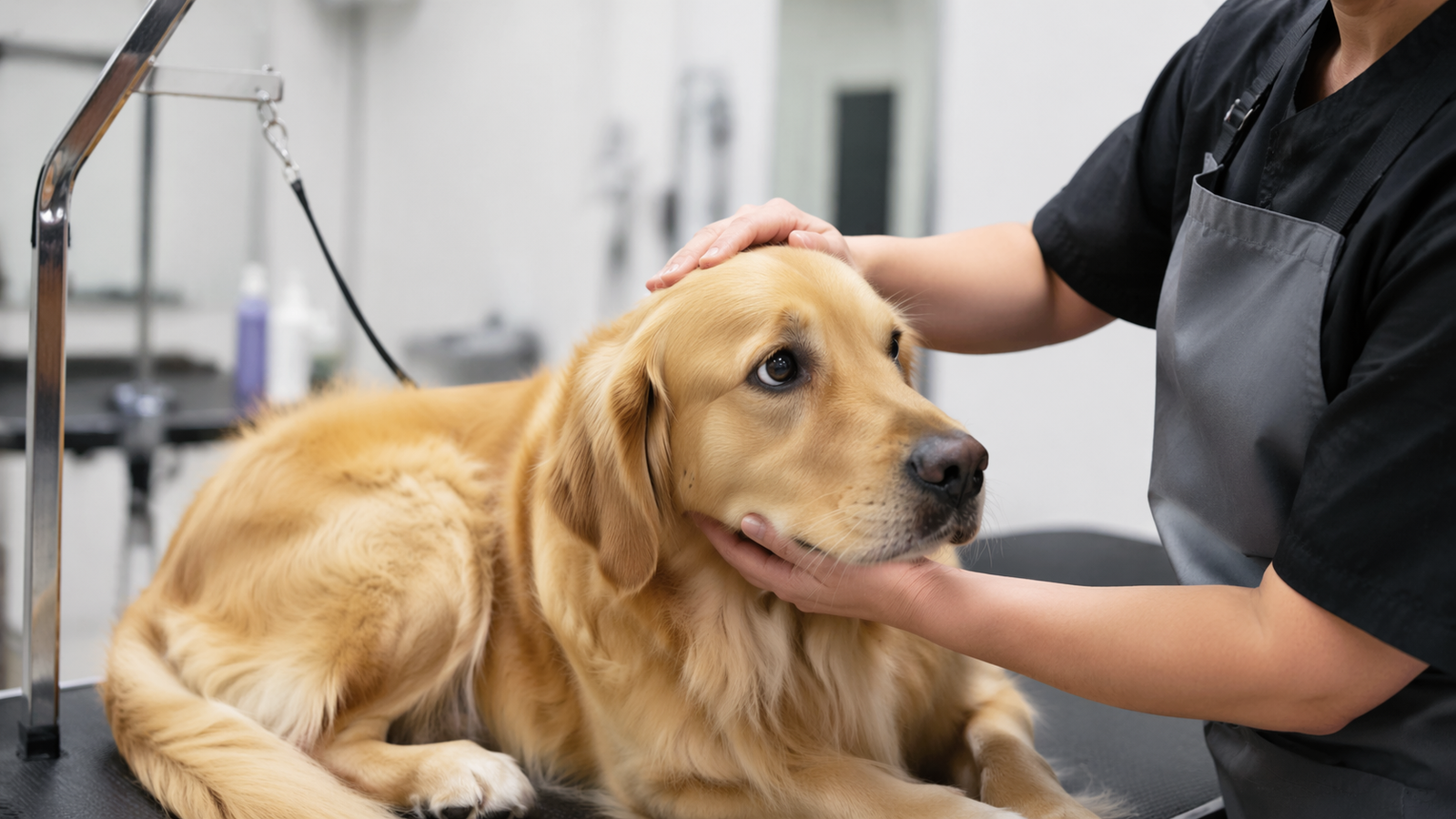
A nervous dog can turn a routine grooming appointment into a tense, unproductive experience in minutes. Many owners assume the answer is to “just get it done,” but that mindset usually makes stress worse, not better. Well-run dog grooming salons know that anxious behavior is not a side issue. It affects safety, timing, coat quality, and the dog’s willingness to return for future care. The goal is not to force cooperation. It is to lower fear, read behavior early, and create a grooming process that the dog can tolerate without escalating into panic.
Why Anxiety Changes The Appointment
- What Groomers Notice Right Away
Nervous dogs rarely arrive with only one clear sign of stress. Some shake, pull back, or vocalize. Others freeze, avoid eye contact, or become unusually still. Groomers are trained to recognize that anxiety can appear as resistance, silence, panting, paw lifting, sudden movement, or refusal to stand comfortably. That early read matters because how the first few minutes are handled often determines whether the appointment becomes manageable or increasingly difficult.
Salons that work carefully with anxious dogs do not treat all nervous behavior the same way. A young dog with little grooming experience needs a different approach than an older dog with a history of difficult appointments. In many operations, even the intake conversation shapes the plan. Details about prior grooming reactions, sound sensitivity, touch tolerance, and past handling problems help the salon prepare before the dog reaches the table. Teams that use this kind of preparation consistently, including those serving clients near a Port St. Lucie office, are usually trying to reduce surprises rather than react to them after stress builds.
- Calm Handling Comes Before Grooming
One of the most important things grooming salons do is slow the process down at the beginning. Nervous dogs are often overwhelmed not by one specific grooming step, but by the speed at which unfamiliar handling starts. A rushed handoff, loud drying area, or immediate restraint can heighten anxiety before trust has any chance to develop. Skilled groomers often begin with controlled, calm contact, allowing the dog to settle into the environment before expecting cooperation.
This does not mean turning the appointment into a long waiting period. It means using a measured pace that respects the dog’s threshold. A few minutes of calm orientation can save much more time later by preventing struggle, reactivity, or shutdown behavior. Salons that understand canine stress know that a smoother appointment often begins with less pressure, not more.
- Environment Plays A Bigger Role
The grooming environment directly affects nervous dogs. Noise, strong smells, crowded holding areas, and rapid movement from staff or other animals can all intensify stress. Many salons reduce anxiety by managing the setting as carefully as the haircut. Lower noise levels, cleaner transitions between dogs, separation from highly reactive animals, and predictable handling routines all help reduce overstimulation.
Environmental control is more important than many owners realize. Some dogs do not resist grooming as much as they react to a space that feels chaotic. A dog that struggles in one salon may behave much more steadily in another simply because the handling style and atmosphere are calmer. This is one reason experienced groomers pay attention to more than grooming technique. They understand that behavior is shaped by the full setting, not just by the clippers or brush.
- Breaking The Groom Into Stages
For highly nervous dogs, salons often divide the appointment into more manageable pieces. Instead of expecting the dog to tolerate every part of grooming in one uninterrupted session, groomers may approach the process in stages. Bathing, drying, brushing, face work, nail trimming, and clipping can all carry different stress levels for different dogs. Identifying where the tension rises helps the groomer prioritize and adapt.
This staged approach is practical. A dog may tolerate bathing but panic during drying, or accept body clipping while resisting foot handling. Once that pattern becomes clear, the salon can adjust technique, timing, or sequencing. Sometimes the goal is not a perfect groom on the first visit. It is a safe and workable experience that builds tolerance for future appointments. That mindset often produces better long-term results than pushing for too much too soon.
Why Patient Handling Matters Most
Dog grooming salons handle nervous dogs successfully by treating stress as part of the job, not as bad behavior to overpower. They use calmer pacing, controlled environments, behavioral observation, staged grooming, and honest communication with owners to prevent fear from taking over the appointment. Those choices make grooming safer and more productive for everyone involved.
For anxious dogs, the real measure of a good appointment is not just how neat the coat looks at the end. It is whether the dog leaves without having the experience turned into another reason to fear the next visit. Salons that understand that point tend to build better long-term outcomes, because nervous dogs do not need more pressure. They need steadier handling and a process built around trust.