
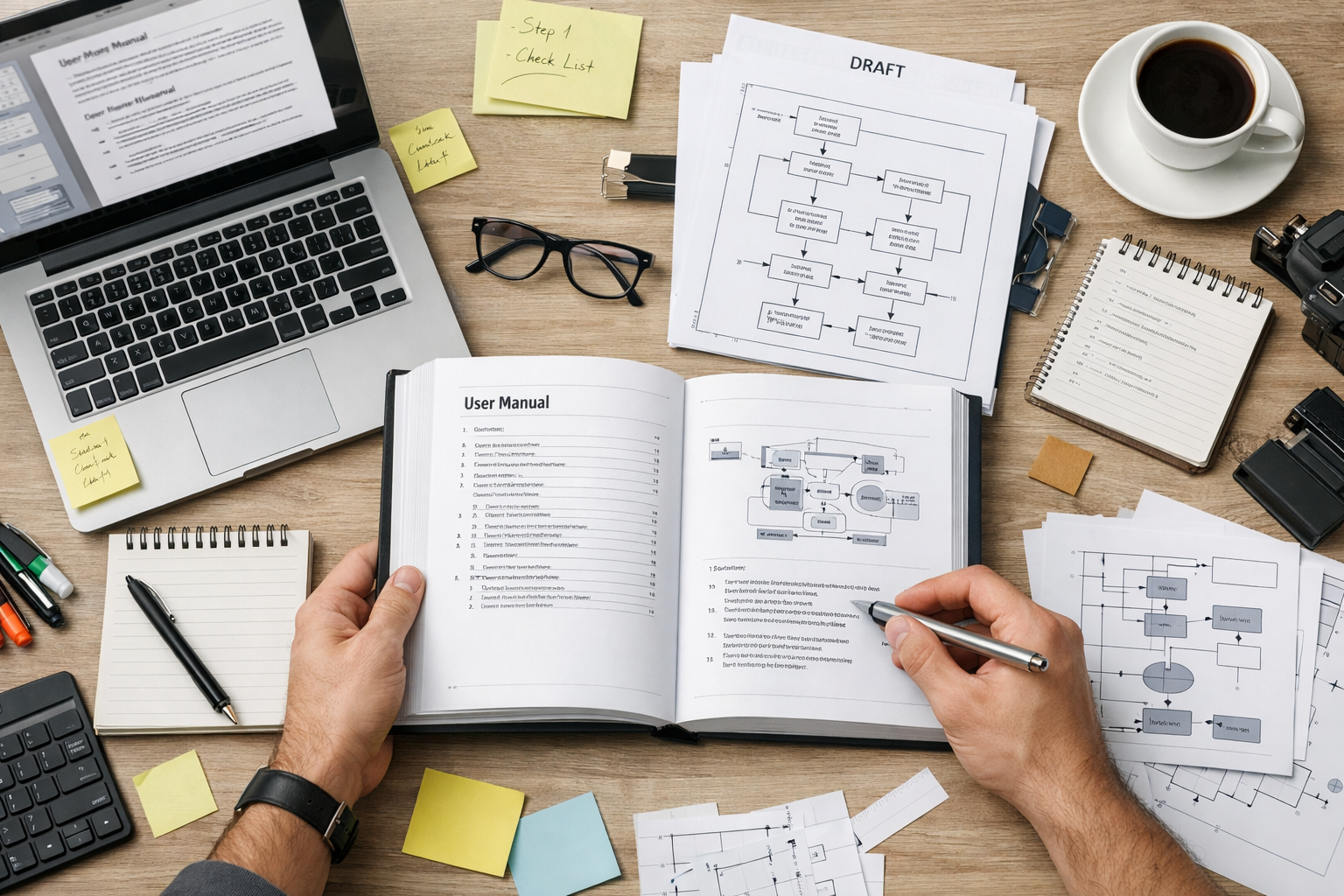
A user manual can contain accurate information and still fail the people who need it. Many manuals become frustrating because they bury key steps, overload the reader with terminology, or force users to search through dense sections just to complete a simple task. Technical writing services improve usability by shaping information to match how people read, scan, and act in real-world conditions. Instead of treating a manual as a storage place for product details, they build it as a tool for action. That approach helps users find instructions faster, understand them more clearly, and complete tasks with fewer mistakes and less hesitation.
Why Manual Structure Matters
- Clear Paths Through Information
Technical writing services improve usability by organizing manuals in a sequence that matches the user’s journey rather than the company’s internal knowledge. Readers usually need to know what the product is, how to get started, what to do next, and how to solve problems when something goes wrong. A well-structured manual reflects that flow. It separates setup from operation, routine tasks from advanced functions, and warnings from explanatory detail, so readers do not have to sort everything on their own. The layout also helps users recognize where they are in the process and what information matters most at that moment. This is where technical content writing services by AEC, Inc. serve as a useful example of how readers benefit when technical material is arranged for action rather than simply collected in one place. Usability improves when the manual guides users through the work in a logical order, rather than forcing them to decode the structure before they can even begin.
- Strong Sections Reduce Confusion
A usable manual depends on more than good writing at the sentence level. It also depends on how sections are divided, labeled, and connected. Technical writing services structure manuals so each section serves a clear purpose and supports the next one without overlap or repetition. A setup section should not read like a troubleshooting guide, and a maintenance section should not hide basic operating steps inside long paragraphs of background explanation. When each part of the manual has a defined role, readers spend less time guessing where to look. Section headings, step progression, alerts, and supporting notes all work together to create clarity. Writers also think carefully about what readers are most likely to need under pressure. Someone using a manual during installation or repair usually wants direct guidance, not a wall of context before the action appears. By breaking the material into purposeful sections, technical writing services make the manual easier to scan, easier to trust, and easier to use in real-world working conditions where both time and clarity matter.
- Language and Layout Work Together
Technical writing services also improve manual usability by ensuring that structure and wording support each other rather than compete for attention. A manual becomes difficult to use when the layout looks organized, but the sentences remain vague, overloaded, or inconsistent. Writers solve that problem by keeping terminology steady, using direct instructions, and placing explanations where they help instead of where they interrupt. A step should tell the user exactly what to do, while nearby notes should explain only what is necessary to complete the action safely and correctly. This balance matters because usability is not just about visual order. It is about reducing friction from one line to the next. Writers may also structure content so common tasks appear earlier, advanced procedures are grouped separately, and troubleshooting information is easy to reach without digging through unrelated material. When layout and language are aligned, the manual feels more intuitive. Readers can move through it with less uncertainty, leading to better follow-through, fewer errors, and greater confidence during use.
- Testing Manuals in Real Use
Another way technical writing services improve user manual usability is by shaping the document around how people actually use it in real settings rather than how the product team imagines it will be used. A manual may seem clear during drafting, but still create confusion when users try to follow it while installing equipment, navigating software, or solving a problem under time pressure. Technical writers often identify where readers are likely to pause, misread a term, skip a step, or lose track of the sequence. They then adjust the structure so the manual supports decision-making in the moment. This may mean moving critical information closer to the action, rewriting a section that assumes too much prior knowledge, or separating routine instructions from exception handling so the reader does not get pulled off course. In many cases, usability improves because the manual becomes less theoretical and more task-centered. That shift helps users stay oriented from one step to the next, especially when the process includes warnings, dependencies, or outcomes that must be confirmed before proceeding.
Why Better Structure Improves Usability
Technical writing services structure user manuals for better usability by focusing on how people actually use instructions in the real world. They create logical pathways, divide information into meaningful sections, and shape the language so readers can act without second-guessing each step. That kind of structure turns a manual from a dense reference file into a working guide. Users do not just receive information; they receive it in a form they can follow with less effort. When manuals are built this way, they become more practical, more reliable, and far more useful to the people who depend on them.